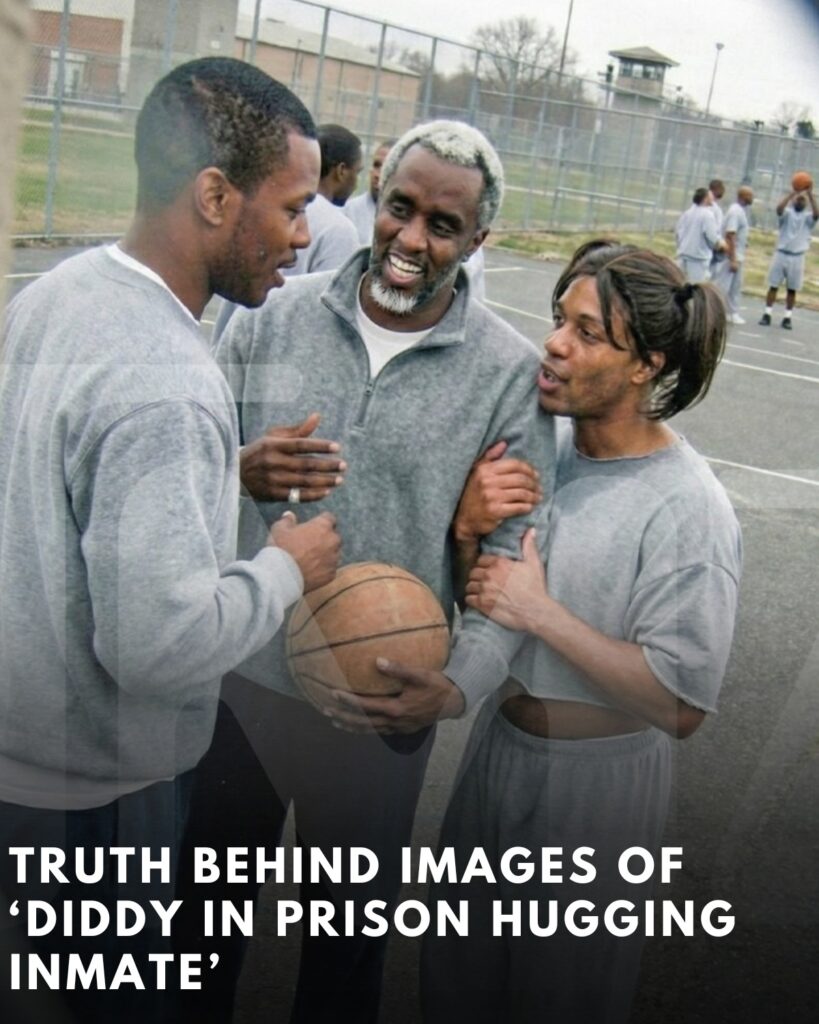
Music executive and artist Sean Combs is combating a wave of digitally manufactured images and videos that purport to show him inside a federal prison. The content surfaced on social media over the past week and depicts Combs in prison attire embracing other inmates or wandering prison grounds. According to statements from his representatives, the materials are entirely fabricated using artificial-intelligence tools and bear no resemblance to his actual circumstances.
Combs is currently serving a 50-month sentence at a federal facility in New Jersey following a conviction earlier this year for transporting individuals for prostitution. He was transferred to a low-security prison known as Fort Dix, where he reportedly is enrolled in a residential drug-abuse programme. In recent weeks, photos were legitimately released showing him outside in prison clothing — notably sporting a dark jacket, a beanie, and a fuller grey beard — marking the first widely available images of him since his incarceration.
The fake posts, however, went far beyond those legitimate photos, layering sensational imagery onto what remains a sensitive legal and personal matter. Some still images show Combs appearing to smile broadly while hugging men in prison uniforms. Others feature him strolling through yard spaces that many viewers assumed to be part of prison grounds. More alarmingly for some observers, at least one video clip circulated that claimed to show Combs in inmate attire and chatting casually with others, all appearing strikingly realistic. The watermark of a major celebrity-news outlet added to the deceptive impression.
Representatives for Combs have forcefully denounced the materials. In public comments they described the images and video as “AI fabrications,” emphasising that none reflect Combs’s real appearance or activities. They framed the spread of such content as part of a growing challenge posed by synthetic media, warning that heightened realism in generated visuals can easily mislead — particularly in high-profile cases that are already subject to heavy scrutiny.
Public reaction to the images has been mixed. Some social media users expressed outrage that such false portrayals could influence public perception of a convicted individual, especially while legal and rehabilitative processes are ongoing. Others initially accepted the posts as authentic, though a growing number began pointing out oddities — unusual lighting, implausible access to prison amenities, or behaviors unlikely inside actual facilities. Some commenters accused those sharing the images of “fearmongering,” while others warned that the technology’s power to blur fact and fiction posed a broader threat to public trust.
Observers note that the appearance of the fake content coincides with renewed media attention on Combs, as a documentary produced by a fellow artist is set to premiere soon. The film will reportedly offer detailed insight into the trial, conviction, and aftermath. The circulation of false prison imagery so close to the documentary’s release has raised concerns about the potential for misinterpretation, confusion, or reputational damage — especially if viewers mistake stylised or dramatized content for genuine evidence.
This episode underscores the accelerating challenge of synthetic media in the digital age. Technologies that once required specialist skill are now widely available and capable of producing convincingly realistic content in minutes. When used irresponsibly, such tools can catalyse misinformation, distort public understanding, and complicate already sensitive legal matters. In the case of Combs, they have turned a highly publicised incarceration into an even more complicated battle over truth and image.
At present, Combs remains incarcerated, and no credible images aside from the November photographs of him outside prison have been verified. His representatives continue to discourage the public from accepting any further images or videos portraying him inside a prison facility. They urge people to rely only on official confirmation rather than content found on social media. The incident reflects growing concerns among civil-rights advocates, media observers, and legal professionals about how deep-fake content might affect individuals already enmeshed in the judicial system.