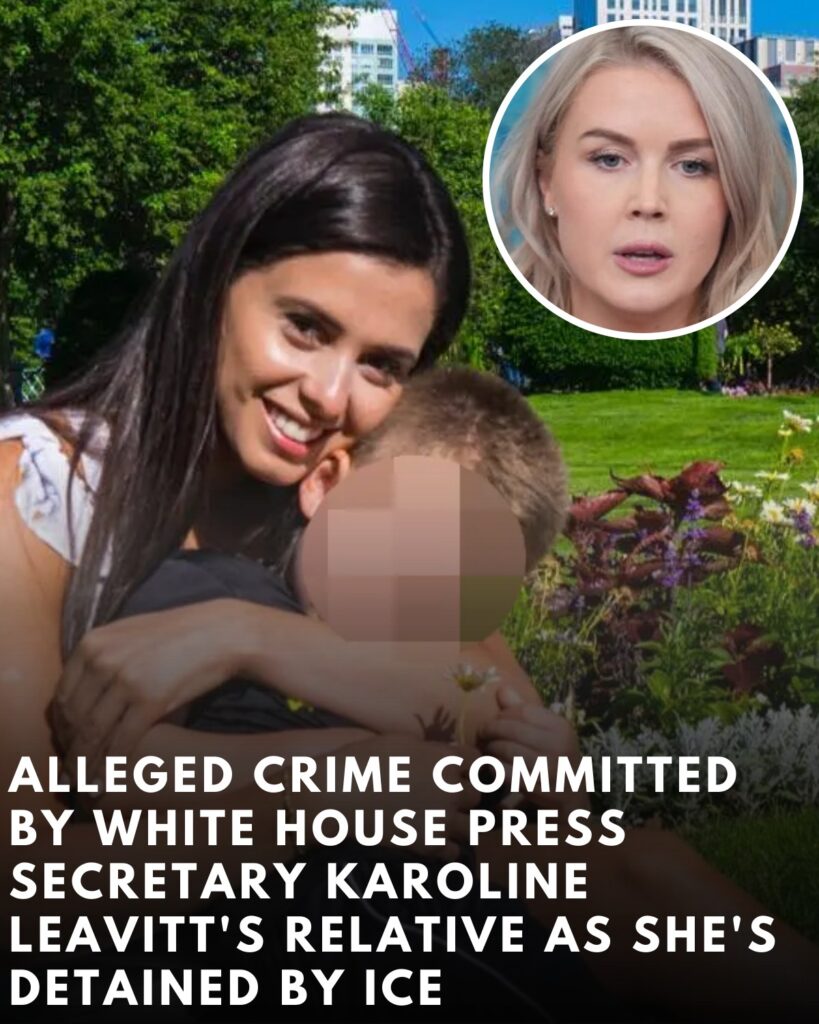
Karoline Leavitt, the current White House Press Secretary, is facing a personal connection to the sweeping immigration enforcement campaign carried out by Immigration and Customs Enforcement (ICE) after one of her relatives was detained earlier this month. The relative is identified as Bruna Caroline Ferreira, the mother of Leavitt’s nephew. Ferreira was taken into custody in Revere, Massachusetts, while driving to pick up her young son. She is now being held at an ICE processing facility in Louisiana, under removal proceedings.
According to officials, Ferreira, who is originally from Brazil, reportedly entered the United States decades ago as a child with her parents, and had at times claimed protection under a programme for individuals who arrived in childhood. ICE has classified her as an undocumented immigrant whose tourist visa expired long ago. Authorities further allege she has a prior arrest record for battery. Following her detention, her sister established a fundraising effort to cover legal expenses, describing Ferreira as a hardworking single mother who deserves a chance to stay near her family.
To date, Leavitt herself has not commented publicly on the detention of her relative. The development nevertheless carries heightened significance because Leavitt has publicly defended the current administration’s hard-line immigration policies. In recent weeks and months, she has reiterated that the administration is committed to enforcing immigration laws strictly, including deportation of undocumented migrants and a crackdown on those alleged to have committed crimes.
Members of the broader family have expressed concern for the welfare of the 11-year-old boy at the centre of the situation. The child is reportedly living full time with his father and step-mother in New Hampshire and had not been residing with his mother for years. Family members say the boy has not seen his mother since her arrest, and they fear the separation will have long lasting emotional impact. According to them, the mother’s detention, in a facility far from her hometown, has compounded worries about the child’s wellbeing, especially as the holiday season approaches.
Local and national immigrant-rights groups have pointed to this case as emblematic of the tensions arising from aggressive immigration enforcement under the current administration. Critics argue that detaining someone with long-standing ties in the United States, including a history of caring for a child and working to build a stable life, raises questions about the human cost of sweeping deportation policies. Supporters of the enforcement efforts maintain that the law must apply to all, and that overstay of visas, regardless of personal circumstances, carries legal consequences.
Officials from the Department overseeing ICE have defended the arrest, framing it as a lawful action against someone who allegedly remained in the United States illegally and had criminal charges on record. At the same time, members of Ferreira’s family and their legal representatives dispute those accusations. They say that she has been unfairly labelled despite having lived in the U.S. since childhood, had previously relied on a deferred-status programme, and has not been convicted of any recent offences. They argue that procedural errors and outdated status assessments have unjustly placed her and her family in peril.
The detention comes at a politically sensitive moment. The administration’s intensified immigration crackdown has sparked widespread debate over its impact on communities, civil liberties and families. For the press secretary to have a close relative ensnared in that same crackdown adds a personal dimension to a public policy fight. Some political analysts suggest the case could draw additional scrutiny to the human consequences of deportation orders, or potentially influence how enforcement actions are perceived moving forward.
As the legal process proceeds, the central questions remain: whether Ferreira will be deported, whether her child’s living situation will be disrupted further, and how the administration reconciles its public immigration stance with this family link. In the meantime, the case underscores how broad enforcement policies can intersect painfully with private lives, even those of high-ranking government officials.