
Patriarchy Still Shapes Lives
Patriarchy remains alive today, affecting both men and women in subtle, often hidden ways. Many wonder why society continues to tolerate inequality and misuse of power. Solving these deep-rooted issues takes time. Yet, some people spark conversations and push for change—slowly but surely.
A Viral TikTok Sparks Debate
TikTok user @domesticblisters recently posted a video that caught massive attention. She stated that the most eye-opening thing she learned about men is that they “don’t actually like women.” In her video, she explained a theory: society doesn’t teach boys how to be masculine. Instead, it teaches them how not to be feminine. The post quickly went viral, drawing millions of views and widespread discussion.
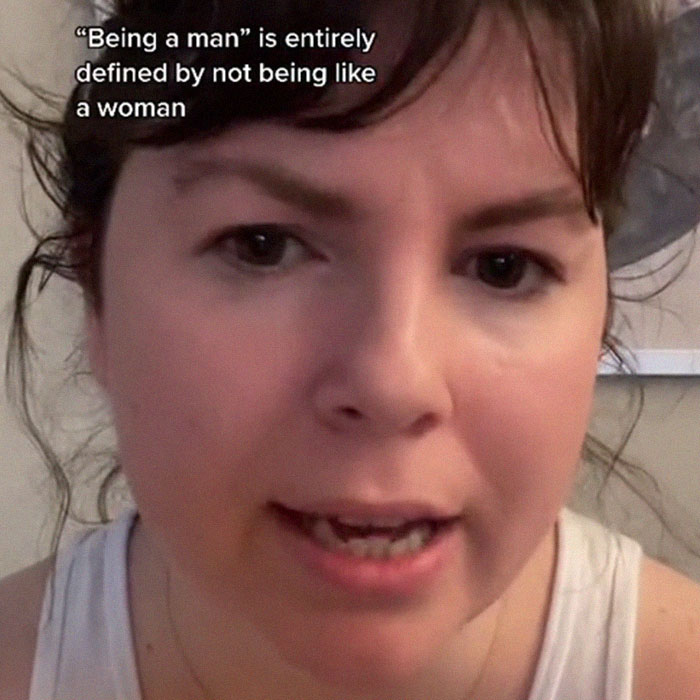
Image credits: domesticblisters
KC Davis: The Therapist Behind the Theory
Licensed therapist KC Davis, speaker, and author of How to Keep House While Drowning: 31 Days of Compassionate Help, shared the video. On TikTok, she discusses mental health, relationships, social issues, and self-care. In less than a year, her account attracted over 1.2 million followers.
Davis began her therapy journey at age 16 after entering treatment for drug addiction and mental health challenges. Following her recovery, she became a speaker and advocate for mental health. As a mother of two, her professional experience spans roles as therapist, consultant, and executive director, mainly focusing on addiction recovery.
Patriarchal Masculinity Explained
In her video, Davis referenced a college professor who taught her that patriarchal masculinity socializes men by linking shame, violence, and disgust. Society defines being a man by not being a woman, while feminine traits are undervalued. Masculinity, in contrast, is seen as powerful.
Therapist and author Terry Real told Forbes that patriarchy enforces a rigid gender dichotomy. Men are expected to be strong, independent, unemotional, and logical. Women, conversely, are assumed to be expressive, nurturing, and dependent. He argued that traditional gender roles neither foster happiness nor intimacy.
“The old rules were built for stability, for production and consumption. Intimacy? Happiness? No. Today, we want both,” Real explained.
Redefining Masculinity and Femininity
Real emphasized the need to reconfigure gender roles. He suggests raising children to be whole people: women can be strong, men can be vulnerable, and both can express emotion freely. He recommends three steps:
- Step out of your comfort zone. Recognize contempt for vulnerability in both sexes and embrace emotional honesty.
- Build community support. Talk openly with friends and family. Make personal growth a collective effort.
- Insist on wholeness. Encourage relationality in boys, strength in girls, and balance in all relationships.
The Toll of Patriarchy on Men and Women
According to a Pew Research Center survey, 40% of women report experiencing gender discrimination, compared to 18% of men. Millennial women are more likely than men to feel that patriarchy favors men, with only 48% agreeing that gender-role changes have benefited women, compared to 61% of Millennial men.
Men, too, suffer under patriarchal expectations. Suppressing vulnerability and emotions places tremendous pressure on their lives. Davis suggests teaching children to be good people first, without rigid gender rules. They can be strong and vulnerable, embracing wholeness in both personal growth and relationships.
Moving Toward Change
Patriarchy is powerful, but not invincible. Conversations like KC Davis’ TikTok encourage reflection and action. By redefining masculinity and femininity, society can create more balanced, empathetic, and authentic human connections.