The Trump administration has begun moving to sharply expand efforts to strip citizenship from some naturalised Americans, prompting legal and political scrutiny as officials frame the policy as part of a broader crackdown on immigration fraud and national security risks.
Internal guidance cited by The New York Times and described by Reuters said US Citizenship and Immigration Services (USCIS) asked field offices to “supply Office of Immigration Litigation with 100-200 denaturalization cases per month” during the 2026 fiscal year. Reuters reported the increase would represent a major escalation compared with the modern historical baseline, with the Immigrant Legal Resource Center (ILRC) estimating denaturalisation averaged about 11 cases per year between 1990 and 2017.
Denaturalisation is the legal process through which the US government can revoke citizenship from people who became Americans through naturalisation. Under US law, it can occur in cases where citizenship was obtained illegally or through the misrepresentation of a material fact during the naturalisation process, Reuters reported. The process typically requires civil litigation and can take years to resolve, according to the same report.
A USCIS spokesperson told Reuters the agency’s “war on fraud” prioritised people who unlawfully obtained US citizenship, and said: “We will pursue denaturalization proceedings for those individuals lying or misrepresenting themselves during the naturalization process.”
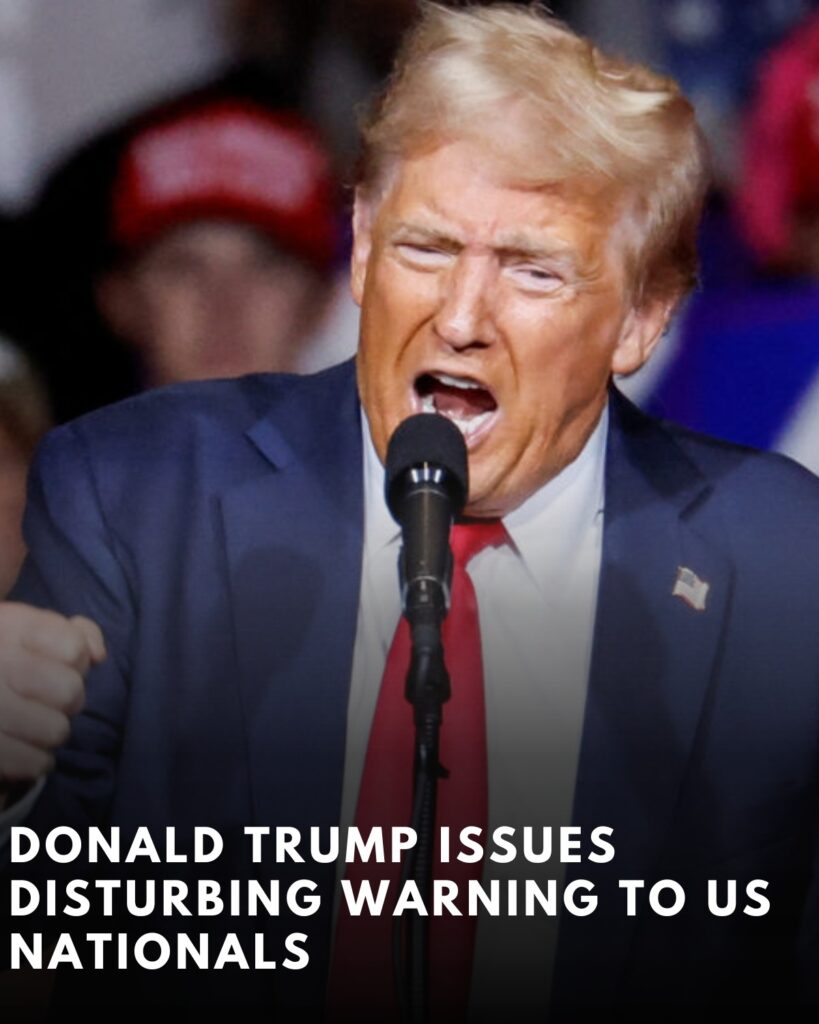
The push has unfolded alongside public comments by President Donald Trump that drew renewed attention to the idea of revoking citizenship, including comments to reporters in late 2025 in which he suggested he would go further if he had clear authority.
In a separate report about remarks made on Air Force One, ABC-owned station ABC7 Chicago said Trump was asked whether he wanted the power to take citizenship away from certain Americans. The outlet reported he responded: “If I have the power to do it, I’m not sure that I do, but if I do, I would denaturalize, absolutely,” while discussing people he described as “criminals” who had been naturalised.
Civil rights groups and immigration advocates have warned the policy could have a chilling effect far beyond a relatively small number of court cases, particularly if denaturalisation referrals become a routine performance metric for a large federal bureaucracy. Commentators have argued that even a focus on fraud-based cases can create fear among immigrant communities when paired with sweeping rhetoric about “reverse migration” and the boundaries of who counts as American, themes explored by legal and policy analysts in the months surrounding the reported guidance.
The broader debate has also landed amid Trump’s wider assertions about executive power and the constraints he believes apply to US actions abroad.
ABC News reported on 8 January 2026 that Trump, in a wide-ranging interview with The New York Times, said his “own morality” was the main limit on his global power. ABC reported Trump told the newspaper: “Yeah, there is one thing. My own morality. My own mind. It’s the only thing that can stop me,” and added: “I don’t need international law. I’m not looking to hurt people.” ABC said Trump then conceded his administration must adhere to international law but qualified that position, reporting him as saying: “It depends what your definition of international law is.”
ABC News said the interview came as several Trump administration moves drew international attention, including a US raid in Venezuela that resulted in the capture of Nicolás Maduro and his wife, as well as renewed White House discussion of “a range of options” to acquire Greenland, including the possible use of the military, according to comments ABC attributed to White House press secretary Karoline Leavitt. ABC also reported Trump signed a memorandum directing the US to withdraw from 66 international organisations, including entities affiliated with the United Nations, arguing the programmes no longer served US interests.
On immigration, Reuters reported the denaturalisation guidance aligned with a broader agenda that has included travel bans, an attempt to end birthright citizenship, and a pause affecting certain immigration applications and citizenship processing for immigrants from 19 non-European countries, though Reuters noted denaturalisation proceedings themselves can be complex and time-consuming.
Supporters of a tougher approach to denaturalisation have long argued the government should more aggressively pursue cases involving serious criminal histories, national security concerns, or deliberate deception in immigration filings, contending that citizenship should not stand if it was obtained through fraud. Critics counter that expanding referrals at scale risks mistakes, unequal application, and pressure on immigrants to prove an elevated, ongoing “worthiness” of citizenship that native-born Americans are never required to demonstrate.
Legal experts have also pointed out that denaturalisation is not a simple administrative switch. The government generally must prove its case in court, and the standards and procedures can vary depending on the alleged wrongdoing and the pathway through which citizenship was obtained. Even where fraud is proven, the consequences can extend beyond the loss of citizenship, potentially exposing individuals to removal proceedings and the breakup of families with mixed immigration statuses.
The administration’s decision to seek far more referrals each month, as reported by Reuters, has therefore been read by some lawyers as a signal that civil enforcement units within the Department of Justice could be asked to devote substantial resources to citizenship revocation litigation. That prospect has raised questions about capacity, prioritisation, and what kinds of cases would be chosen to hit the new referral target, given that denaturalisation cases often require extensive evidence gathering and can depend on records from years or decades earlier.
Trump’s own public statements have added political heat to the policy discussion. In the ABC7 Chicago report, the president’s comments focused on naturalised Americans he described as criminals, but civil liberties advocates say such rhetoric can blur, in the public mind, the difference between denaturalisation for proven fraud and the much broader concept of revoking citizenship as punishment or policy preference.
The White House has argued the crackdown is aimed at fraud and threats, not ordinary immigrants, while opponents say the combination of high-volume targets and expansive political rhetoric risks turning citizenship, once granted, into something that feels conditional for a segment of Americans.
As the policy advances, the practical shape of the programme will likely be determined in federal courts, where the government will need to bring individual cases and meet the legal burden required to unwind a grant of citizenship. At the same time, the administration’s broader posture on executive authority, highlighted by Trump’s remarks about “own morality” and international law, has ensured that denaturalisation is being debated not only as an immigration enforcement tool but also as a question about how power is exercised and constrained in the modern presidency.