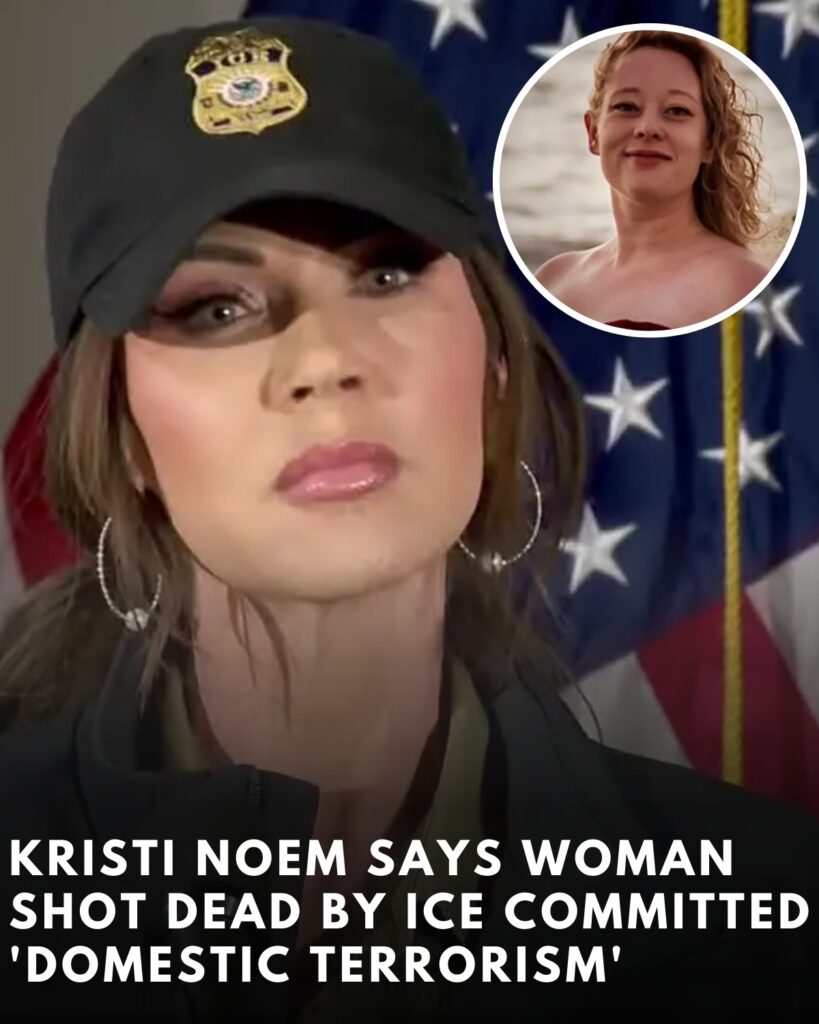
On a snow-covered residential street in south Minneapolis, a traffic stop involving federal immigration officers ended with a 37-year-old woman shot dead at close range, igniting protests and a sharp political dispute over what happened in the seconds before gunfire erupted.
Federal officials said the woman used her vehicle as a weapon during an Immigration and Customs Enforcement operation and that an officer fired in self-defence. Minneapolis Mayor Jacob Frey rejected that account after reviewing video footage, calling the federal description “bullshit” and “garbage” and urging federal agents to leave the city.
The woman was identified by her mother as Twin Cities resident Renee Nicole Good, according to the Minnesota Star Tribune. The shooting happened on Portland Avenue near East 32nd Street, a few blocks from long-established immigrant-owned markets and about a mile from the intersection where George Floyd was killed by police in 2020, a touchstone in the city’s relationship with law enforcement and public protest. Within hours, the death drew hundreds of people to the scene, with witnesses shouting and condemning federal authorities as emergency medical workers attempted to render aid.
Homeland Security Secretary Kristi Noem, speaking while travelling in Texas, described the incident as an “act of domestic terrorism” and alleged the woman tried to harm ICE officers with her vehicle. “An officer of ours acted quickly and defensively, shot, to protect himself and the people around him,” Noem said, according to an Associated Press report carried by WHYY. The Department of Homeland Security, through spokesperson Tricia McLaughlin, said ICE officers were carrying out arrests in the area when “rioters began blocking ICE officers” and that a “violent rioter weaponized her vehicle.” McLaughlin said an ICE agent, “fearing for his life,” fired “defensive shots,” striking the woman, who later died.
Accounts from neighbours and bystanders, along with video posted online, have formed the basis of competing narratives. Multiple videos recorded from different vantage points show an SUV stopped in the roadway as federal agents surround it. In footage described by WHYY, an officer approaches the driver’s side, orders the driver to open the door and appears to grab the handle. The vehicle begins to move forward. Another officer, positioned in front of the SUV, draws his weapon and fires at least two shots into the vehicle at close range, stepping back as the vehicle moves in his direction. It was not clear from the videos reviewed by reporters whether the vehicle struck the officer.
The Star Tribune reported that the vehicle was a Honda Pilot SUV and cited a nearby resident, Aiden Perzana, who said the SUV was positioned perpendicular to the road, with unmarked federal vehicles nearby. Perzana said agents approached and ordered the driver out before the SUV reversed briefly and then accelerated forward. The Star Tribune account said video shows one agent attempting to open the driver’s door and reaching a hand through an open window as the vehicle began to move. As the SUV drove forward, an agent standing in front fired at least two shots at close range. The paper quoted a neighbour, Emily Heller, who said: “She was trying to get away.”
After the shots, the SUV sped forward and struck parked vehicles before coming to a stop, according to WHYY’s description of the video and witness accounts. A resident who recorded footage, Lynette Reini-Grandell, was quoted saying: “She was driving away and they killed her.” Witnesses could be heard screaming and swearing in shock as the situation unfolded.
The shooting occurred as part of a major immigration enforcement operation in the Twin Cities under the Trump administration, according to the Associated Press report republished by WHYY. Frey criticised the broader federal deployment, describing it as a strategy that fuels fear and disorder rather than public safety. “What they are doing is not to provide safety in America. What they are doing is causing chaos and distrust,” Frey said, according to WHYY. He said the enforcement activity was “ripping families apart” and “sowing chaos on our streets”, and, in the case of the shooting, “quite literally killing people.” Frey also said he had reviewed video of the encounter and rejected the self-defence framing. “They are already trying to spin this as an action of self-defense. Having seen the video myself, I wanna tell everybody directly, that is bullshit,” he said, according to the same report.
Frey’s language underscored the political volatility of immigration enforcement in Minneapolis, where the legacy of Floyd’s murder continues to shape public expectations and official messaging. The scene of the shooting became heavily secured, with multiple federal agents in tactical equipment visible behind roadblocks. The Star Tribune reported that U.S. Customs and Border Protection commander Gregory Bovino was present alongside armed federal agents wearing bulletproof vests, helmets and face masks.
Federal agencies have not publicly identified the officer who fired the shots, according to the Star Tribune report. The same report said neighbours and bystanders disputed the federal characterisation that the driver attempted to ram officers, with Perzana insisting the motorist was trying to leave rather than run anyone down. In the immediate aftermath, Minnesota leaders called for an independent investigation, reflecting a common practice in police-involved shootings but complicated here by the fact that the shooter was a federal agent operating within a high-profile immigration crackdown.
Noem’s description of the incident as “domestic terrorism” added another layer of controversy. The term typically carries significant legal and political weight, and its use in relation to a single encounter during a traffic stop drew swift backlash from city officials and critics who argued that the label was being applied prematurely and without a completed investigation. The DHS statement, meanwhile, framed the crowd at the scene as hostile, using the language of “rioters” and “violent” actors, even as video clips circulating online showed a chaotic scene where agents appeared to be attempting to open the vehicle door as the SUV moved.
The confrontation came amid a series of immigration operations in major US cities under the Trump administration, described by the Associated Press report as an escalating campaign that has already been linked to multiple deaths. Within that context, the Minneapolis shooting quickly became a flashpoint, both for the fact of a fatal shooting by immigration officers and for the wider question of how such enforcement actions are conducted in dense urban neighbourhoods with high levels of public scrutiny.
As the investigation unfolds, the available public evidence remains shaped largely by bystander video and official statements. The key factual disputes include whether the SUV made contact with any officer, whether agents had viable alternatives to lethal force, and how the stop was initiated and managed, including the presence of unmarked vehicles and agents surrounding the driver’s door. For now, the death of Renee Nicole Good has left Minneapolis confronting a familiar cycle: a fatal shooting, a battle over the narrative within hours, and a community demanding clarity about accountability, all against the backdrop of an immigration crackdown that city leaders say is fuelling fear and division.