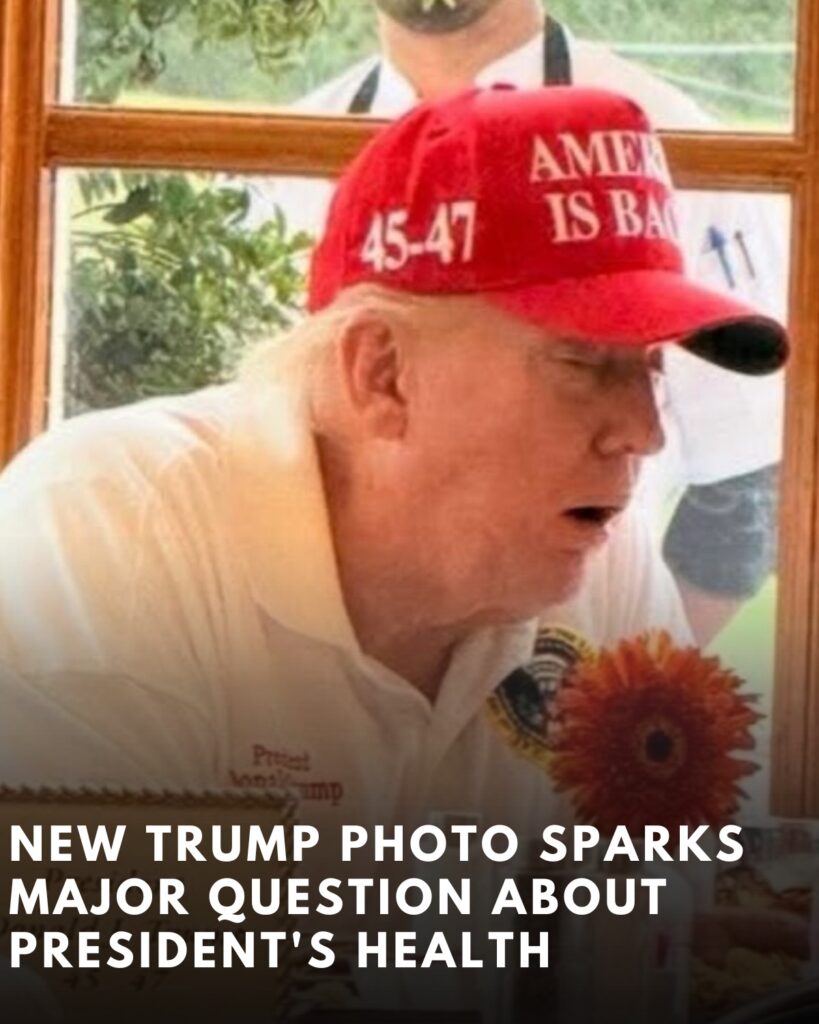
A recently shared photograph of Donald Trump has reignited debate over the health and public image of the 79-year-old president. The image, reportedly taken at his Mar-a-Lago residence over the Thanksgiving weekend, shows him seated at a table, leaning forward with his eyes closed and mouth slightly open. Observers on social media described the snapshot as unflattering and argued that the former president appeared aged and fatigued.
The reaction has triggered renewed demands — particularly among critics — that Trump release the full results of a magnetic resonance imaging scan he underwent in October. The scan, conducted during a physical examination at the Walter Reed National Military Medical Center, has been a subject of ongoing public scrutiny because neither Trump nor the White House initially disclosed which part of his body had been examined. His team has since confirmed that the scan was part of a preventative assessment rather than prompted by a specific health incident, but details remain limited.
Supporters argue the imaging was simply part of routine care given the president’s age. Trump’s press team has described the procedure as “standard,” aiming to monitor cardiovascular and overall physical health. Still, the lack of transparency around the scan’s purpose and findings has fuelled scepticism from opponents. Many see the Mar-a-Lago photo as visually reinforcing doubts about his stamina and fitness.
At 79, Trump has become the oldest person to hold the U.S. presidency. Over the past year, a variety of health indicators — including visible bruising on his hands and swelling in his legs — had already attracted attention. In July, his medical team disclosed a diagnosis of Chronic Venous Insufficiency (CVI), a condition common in older adults, which they said was being managed without significant impact on his duties. The November image now circulating adds to what increasingly resembles a patchwork of public appearances, selective disclosures and lingering questions about his general health.
Reactions to the photo have been sharply divided: some social-media users and political opponents seized on it as evidence that the president is in decline, joking or seriously suggesting he looks “older than his age.” Others claimed the criticism reflects a double standard, pointing out that past scrutiny over health has often focused on rivals, including former presidents, in ways they argue amount to politicised character judgments.
Even before the latest image appeared, experts noted that MRIs are not typically part of a standard physical unless there is a clear medical indication. The fact that one was ordered — and that the White House’s explanation remains vague — has raised eyebrows among some cardiologists and senior care physicians. Without a full disclosure of results, including cognitive assessments or metabolic markers, it remains difficult for independent observers to assess the significance of the scan or to compare it meaningfully against the visual impression given by a candid photo.
At present, there is no credible evidence that any diagnosed condition — beyond the earlier disclosed CVI — has impaired Trump’s ability to discharge his duties. His team maintains he is fit for office. But the Mar-a-Lago image has underscored how much public confidence in a leader’s fitness can hinge on appearance and perception — even when medical results are said to paint a different picture.
In the volatile context of American politics, where image and optics carry enormous weight, the new photograph may prove as consequential as formal health disclosures. As calls continue for greater transparency, any future medical updates — especially if comprehensive — are likely to be scrutinised even more intensely.