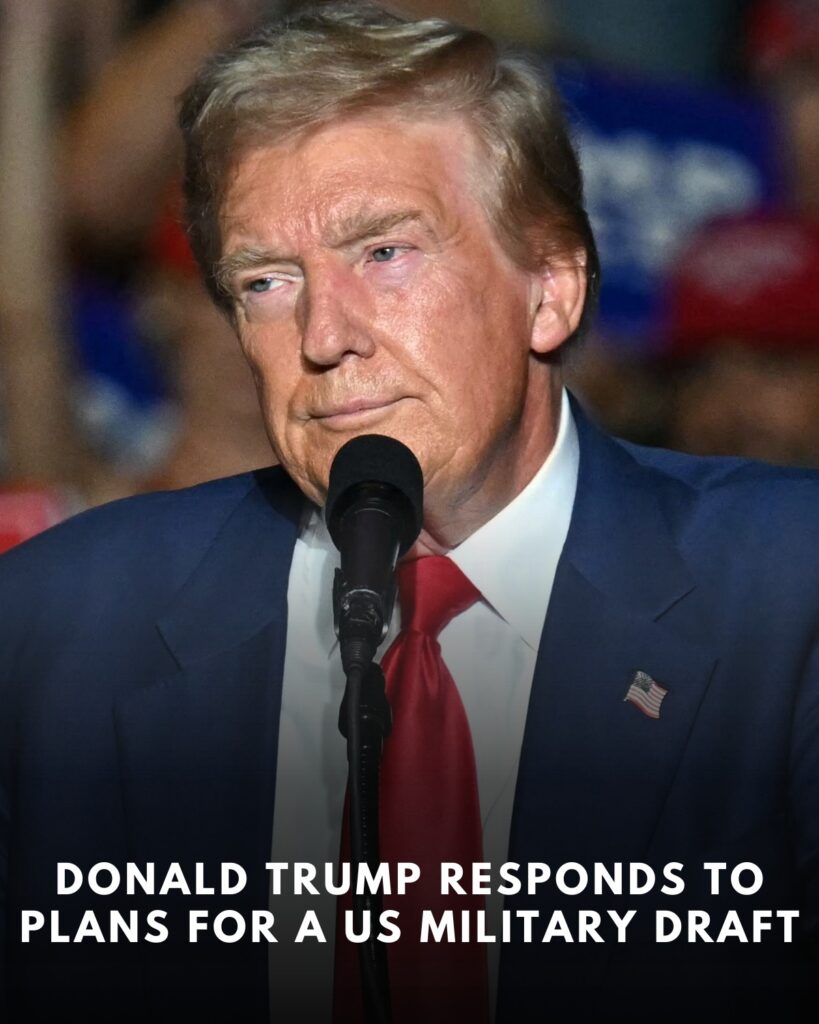
As the Trump administration pressed ahead with its military campaign against Iran, the White House found itself trying to contain a fresh political row at home after press secretary Karoline Leavitt declined to categorically rule out a future U.S. draft, saying President Donald Trump “wisely does not remove options off of the table” and that such a step was “not part of the current plan right now.” Her remarks came during a March 8 appearance on Fox News with Maria Bartiromo, after the presenter raised concerns from “moms” worried that the conflict could grow into a wider war involving American ground forces and conscription.
The exchange quickly became one of the most discussed moments in the domestic political fallout from the Iran campaign. According to the published account of the interview and a separate report that reproduced the relevant portion of the exchange, Bartiromo asked Leavitt what she wanted to say to Americans concerned about “troops on the ground” and a possible draft. Leavitt responded that the operation “has been and it will continue to be” an air campaign, before adding that Trump, “as commander-in-chief,” wanted to continue assessing the success of the military operation. She then said plainly: “It’s not part of the current plan right now, but the president again wisely keeps his options on the table.”
Those comments immediately triggered alarm among critics and anti-intervention voices because they stopped short of a flat assurance that no draft or ground deployment would happen. The White House’s own Rapid Response account moved quickly to push back, replying to a post claiming Trump might institute a draft by saying: “She didn’t say anything close to this. You just made it up.” That rebuttal did not dispute the wording of Leavitt’s interview so much as reject the interpretation that a draft was actively under consideration, leaving the administration trying to walk a narrow line between projecting flexibility in wartime and calming a domestic audience wary of another major Middle East conflict.
The remarks also exposed a fault line inside Trump’s political coalition. Former Georgia congresswoman Marjorie Taylor Greene, who has often presented herself as fiercely opposed to new foreign wars, seized on Leavitt’s interview and wrote on X: “Karoline Leavitt doesn’t rule out a draft.” She added: “How about the answer is NO DRAFT AND NO BOOTS ON THE GROUND because we campaigned on NO MORE FOREIGN WARS OR REGIME CHANGE!!! Liars every single one of them! Not my son, over my dead body!!!!!” Her intervention showed how quickly the issue had moved beyond a television interview and into a broader argument over whether Trump’s Iran policy is drifting away from the anti-war language that helped define parts of his political appeal.
The controversy is especially potent because of the history attached to the subject. The United States has not used a military draft since the Vietnam era, but the Selective Service system remains in place. According to the Selective Service System, almost all male U.S. citizens and male immigrants aged 18 through 25 are required to register. The agency also states that registration does not mean automatic induction into the military. In the event of a draft, men would be called according to a random lottery number and year of birth, then examined for fitness and considered for deferments or exemptions. That distinction matters politically: Leavitt’s critics treated her words as evidence that the administration was keeping compulsory service in reserve, while the White House response suggested no such decision was being discussed.
The backdrop to all of this is the administration’s intensifying rhetoric around the Iran war. The White House has described the campaign as “Operation Epic Fury,” with an official White House article on March 1 calling it a “precise, overwhelming military campaign” aimed at eliminating what it called an imminent nuclear threat, destroying Iran’s ballistic missile arsenal, degrading proxy networks and crippling naval forces. In the People account of Leavitt’s interview, her remarks were framed against that same operation, with the article stating that Trump had launched the assault on February 28 and that Leavitt defended the action as necessary to protect American troops and bases in the Middle East.
Trump himself has used language that underscores the administration’s readiness for a costly and prolonged confrontation. The People report said he wrote on Truth Social on March 7 that Iran was “being beat to hell.” In comments separately reported by TIME, Trump also acknowledged the prospect of casualties in stark terms, saying Americans should expect losses because “some people will die. When you go to war, some people will die.” The same People article, citing a March 1 address shared by the White House, reported Trump saying that “there will likely be more” deaths before the conflict ends. Those remarks have helped create the climate in which even a conditional answer about “options on the table” can rapidly be interpreted as a warning that escalation, in one form or another, remains possible.
Leavitt’s wording was careful, but the political meaning was unmistakable. She did not say a draft was imminent. She did not say ground troops were being prepared. But she also did not offer the categorical reassurance many Americans, and many Republicans, wanted to hear. Instead, she framed the president’s stance in classic commander-in-chief terms, arguing that he would not limit himself prematurely while assessing the battlefield. That approach may be intended to preserve deterrence abroad, but at home it invites immediate scrutiny because it leaves open the very scenario critics fear most: that a war initially described as an air campaign could, under pressure or through mission creep, demand more personnel than the current force posture allows.
That is why the episode has resonated beyond the usual cycle of televised political outrage. Conscription is one of the few issues that can instantly turn a foreign-policy debate into a kitchen-table question for families, especially when a television host explicitly frames it around parents imagining their sons and daughters being drawn into war. The administration’s own mixed messaging, with Leavitt declining to rule options out and the Rapid Response team later insisting she had been misconstrued, ensured the story would keep moving. As things stand, there is no announced plan for a draft, and the official Selective Service framework remains a dormant contingency rather than an active mobilisation tool. But Leavitt’s interview made clear that, as this war expands and casualties mount, the administration wants to preserve strategic ambiguity, even at the cost of stirring public anxiety at home.