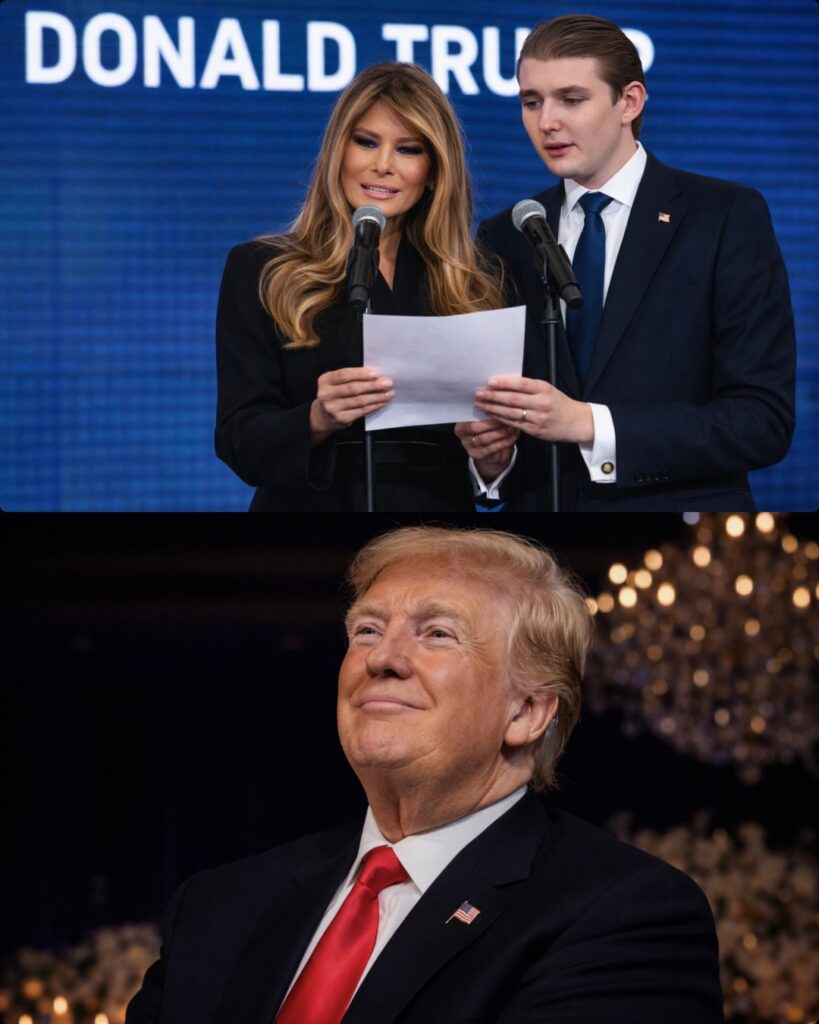
Last night, what had been promoted as a traditional political rally inside a major American arena unfolded into something entirely different.
Thousands had lined up early. Flags and campaign signs filled the entrances. The atmosphere carried all the familiar energy of a large-scale political event. But once the program began, expectations quickly shifted.
Barron Trump was the first to walk onto the stage. Now a young adult, no longer the quiet child once seen standing behind his parents during White House appearances, he moved calmly and deliberately. Minutes later, Melania Trump joined him. Dressed simply and elegantly, she did not wave dramatically or approach a podium. She nodded to the crowd and stood quietly beside her son.
What stood out immediately was the absence of a speech.
There was no booming introduction. No rallying slogan. No campaign-style opening remarks.
Instead, the arena lights dimmed.
Behind them, the massive screens illuminated, and the first images began to roll.
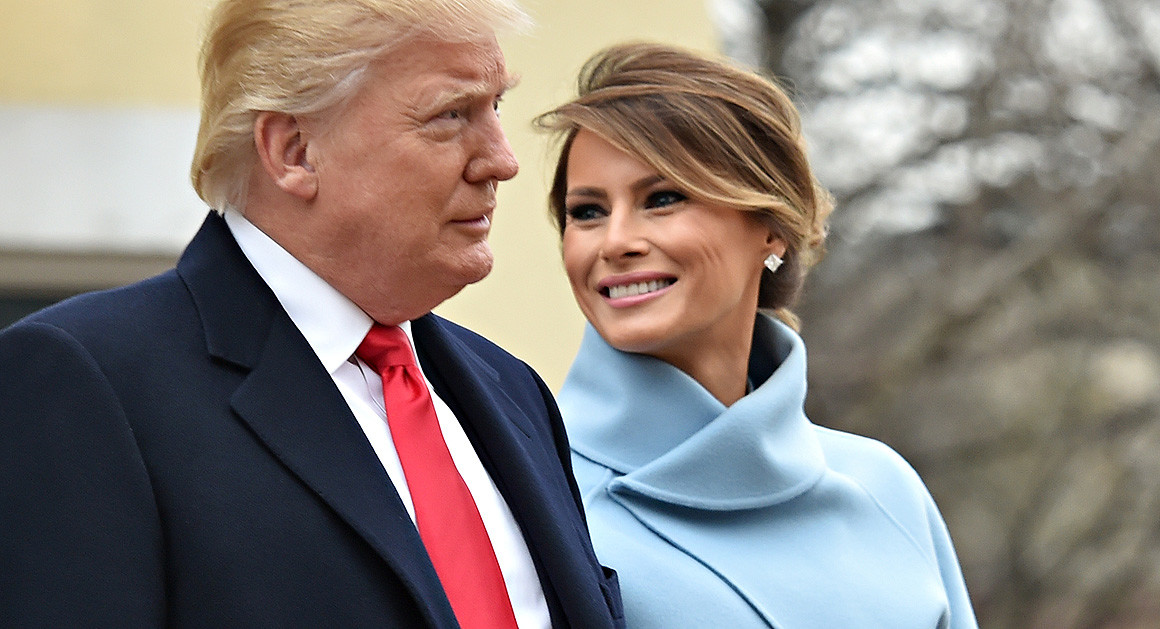
The footage started in the 1980s: Donald Trump as a young New York businessman overseeing early real estate projects. Clips of newly constructed buildings bearing his name followed. Vintage television interviews played, capturing him during the height of his business career. The audience watched in near-total silence.
The narrative then transitioned chronologically into his entry into politics: campaign trail rallies, primary victories, the 2016 election night, and the inauguration ceremony. There was no political commentary layered over the visuals. No analysis. No attack lines. Just a structured, clear timeline of events.
Donald Trump sat in a chair placed at the center of the stage.
He did not hold a microphone.
He did not interrupt.
He simply watched.
Moments from his presidency appeared next: cabinet meetings, international summits, bilateral handshakes with world leaders, press briefings inside the White House. Interwoven among them were more personal images — family holidays, private gatherings, Barron as a child walking beside his father, quiet snapshots that rarely circulated in mainstream coverage.
The 79-year arc of his life unfolded over the course of the presentation: businessman, television personality, presidential candidate, President of the United States, and one of the most influential figures in modern American political discourse even after leaving office.
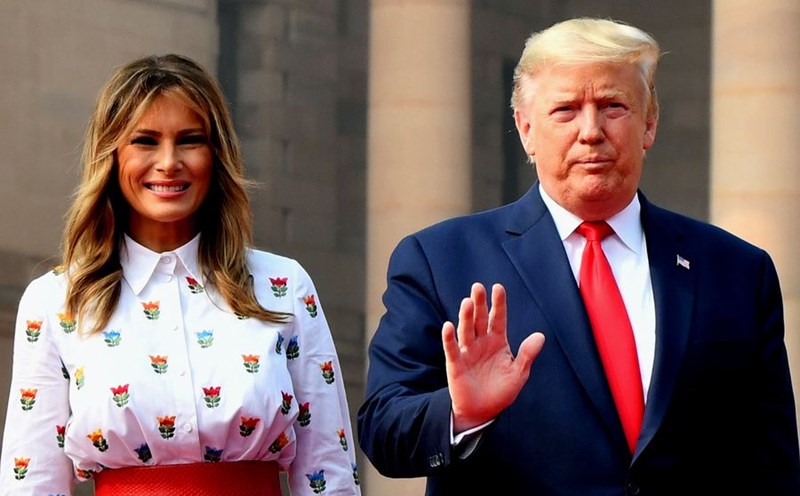
Melania did not speak.
Barron did not speak.
They allowed the images to carry the narrative.
As the presentation neared its conclusion, the tone shifted further toward personal life. Footage showed Trump laughing at a family dinner, reviewing old photographs with Melania, standing beside Barron during informal moments away from cameras. These were not images crafted for campaign messaging. They felt domestic, unguarded.
The final frame lingered on a family photograph taken years ago.
The lights in the arena remained dim for several seconds after the screen went still.
There was a noticeable pause — a silence that stretched just long enough to feel intentional.
Donald Trump lowered his head slightly.
Then he smiled.
It was not the broad grin often seen at rallies. It was brief. Contained. Private.
After a moment, he stood. He shook Barron’s hand, then turned to Melania. No lengthy address followed. No strategic announcements were made.
He spoke only a few words:
“Thank you.”
Applause began — not explosive, not thunderous, but steady and sustained. The crowd seemed to understand that they had witnessed something different from a conventional campaign event.

There were no new policy proposals unveiled that night. No direct references to political opponents. No calls to action.
Instead, the evening functioned as a comprehensive and chronological account of one man’s life — presented publicly, but framed through the presence of his family.
For supporters, it was a tribute.
For critics, it was a carefully constructed image piece.
For others in attendance, it felt closer to a documentary screening than a political rally.
Whatever individual opinions may be, the structure of the event was unmistakable: it shifted focus away from confrontation and toward legacy.
For a brief stretch of time, partisan tension receded into the background. The typical rally soundtrack — chants, slogans, rhetorical crescendos — was replaced by stillness.
When the house lights finally rose and the audience began to file out, the dominant memory was not a chant or a headline-worthy statement.
It was the image of a 79-year-old man seated quietly, watching the full timeline of his own life play out on a screen — with his wife and son standing nearby.
In a political era often defined by noise, last night’s most striking element was silence.