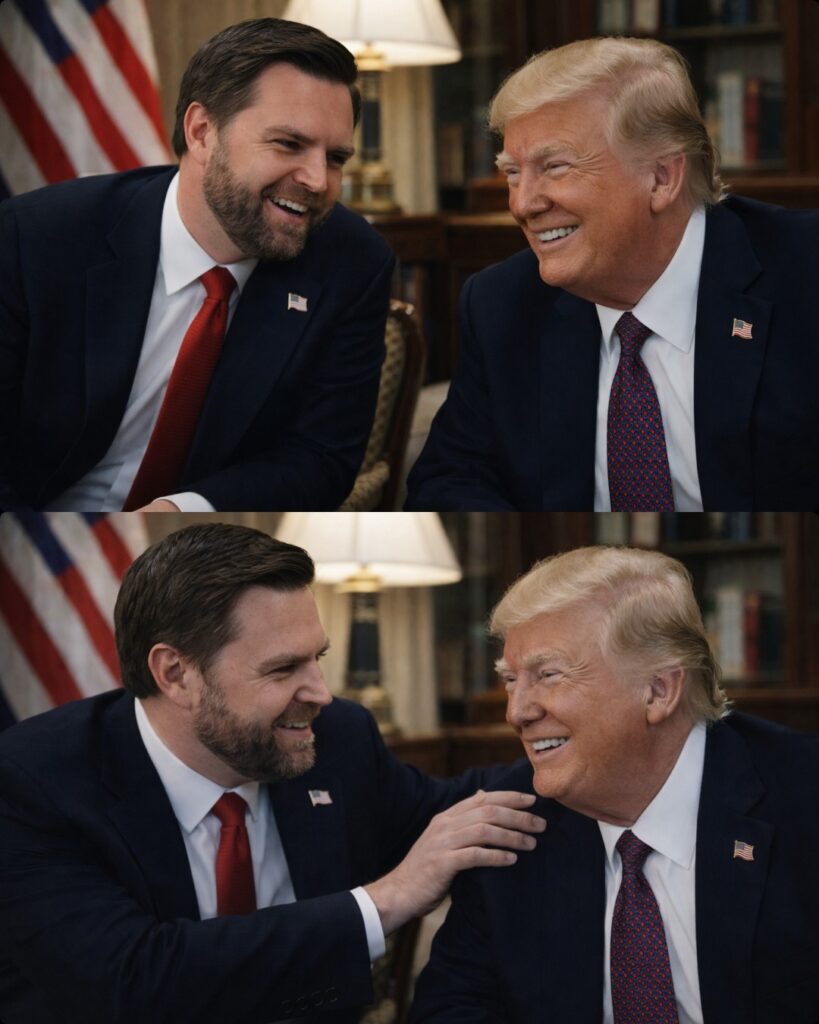
In politics, public moments are often loud, dramatic, and carefully planned. Speeches are rehearsed, schedules are tightly controlled, and appearances are coordinated by teams of staff members and advisers. But sometimes the most meaningful political moments happen far from cameras and microphones.
One such moment unfolded quietly when JD Vance decided to visit Donald Trump on a day when headlines across the country were filled with political tension surrounding the former president.
The visit wasn’t announced.
There were no reporters waiting outside, no press releases sent to television networks, and no official statements prepared by campaign staff. Instead, Vance made a simple decision: rather than sending a message or making a phone call, he would drive to see Trump in person.
According to people familiar with the meeting, Vance left Washington early that morning. The drive gave him time to think about the turbulent political climate surrounding Trump at the time. Public debates were intensifying, critics were growing louder, and every move Trump made seemed to attract intense scrutiny.
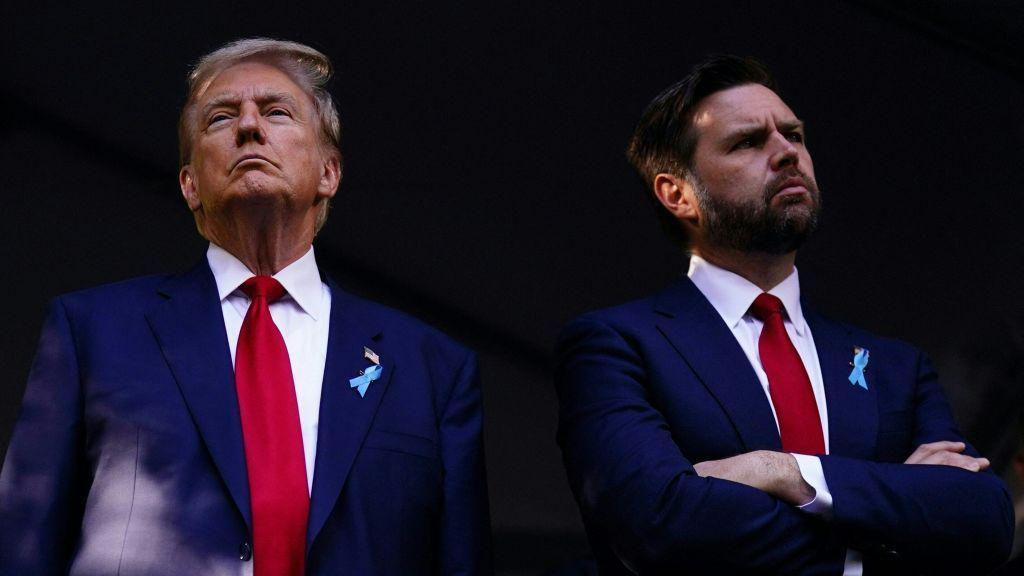
But Vance understood something that many people outside politics often overlook: behind every political figure is a human being navigating enormous pressure.
And sometimes, the best support doesn’t come through public speeches.
It comes through presence.
When Vance arrived at Trump’s residence later that afternoon, the atmosphere was far quieter than the rallies and events both men were accustomed to. Security staff recognized the Ohio senator immediately and escorted him inside.
Trump was reportedly in a private sitting room when Vance arrived.
The two men greeted each other casually — not as politicians preparing for a press conference, but as longtime political allies who had spent years campaigning together, appearing at events, and discussing the direction of the country.
Unlike many meetings between political figures, this one had no formal agenda.
They sat down at a small table near the window where sunlight filled the room. Outside, the day was calm. Inside, the tone of the conversation was equally relaxed.
For several minutes, they talked about ordinary things.
Travel schedules.
Family.
The relentless pace of public life.
Eventually, the conversation turned to the subject dominating national headlines: the intense political battles surrounding Trump and the constant media attention that followed him.
Trump, who had faced decades of public scrutiny as a businessman and later as president, spoke openly about the pressure that comes with being at the center of the national conversation.

According to one person familiar with the meeting, Trump acknowledged that the constant criticism and political fights could be exhausting — even for someone accustomed to controversy.
Vance listened carefully.
Unlike televised debates where politicians interrupt each other or compete for attention, this conversation was unhurried. Vance allowed Trump to speak without interruption, occasionally nodding or offering brief responses.
Then came a moment that both men would later remember.
After listening quietly for several minutes, Vance leaned forward slightly and spoke in a calm, direct tone.
“You know,” he said, “every time they think the pressure will break you… it ends up doing the opposite.”
Trump paused.
For a moment, the room was silent.
Then he smiled.
The comment wasn’t dramatic or confrontational. It wasn’t the kind of line designed for television or social media. But it captured something both men understood about the unusual path Trump had traveled in American politics.
Instead of responding with a long speech, Trump simply shook his head with a faint laugh.
“You’re probably right,” he replied.
The moment broke the tension that had been lingering in the room.
The two men spent the next hour discussing the future — upcoming political battles, the direction of the Republican Party, and the challenges facing the country. Their conversation shifted naturally between serious topics and lighter moments, the way conversations often do between people who have worked closely together.
At one point, Trump poured two glasses of iced tea from a pitcher sitting on the table. It was a small, almost mundane gesture — but it reflected the informal tone of the afternoon.
There were no aides rushing in with documents, no television screens broadcasting breaking news.
Just two men talking.
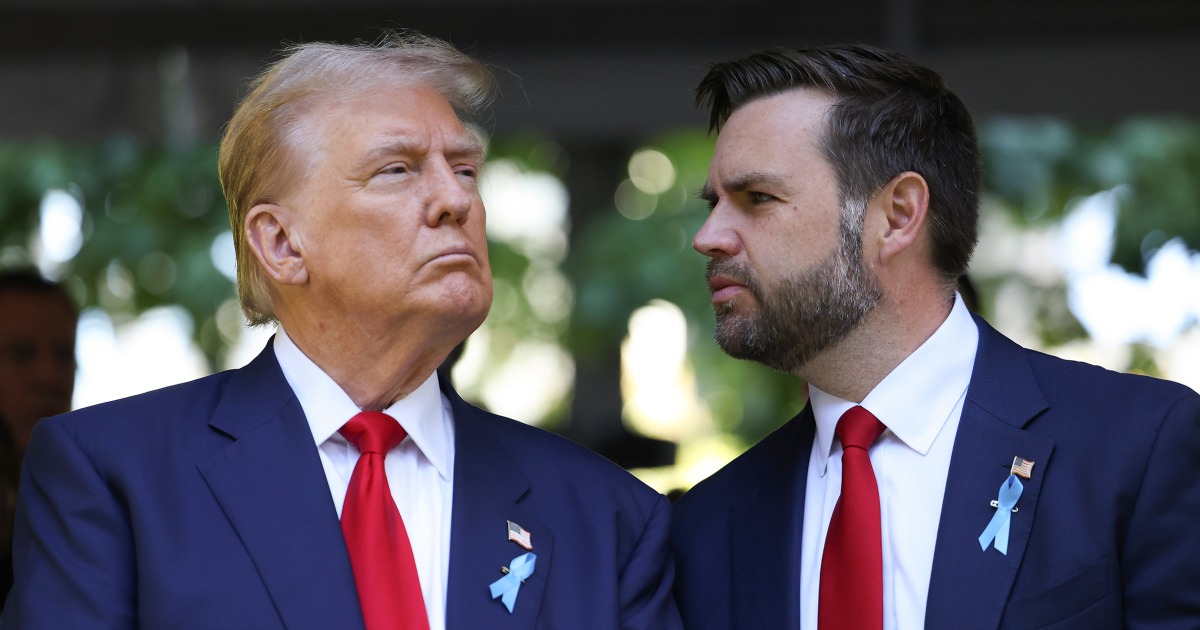
Outside the room, staff members understood that the conversation was private and kept their distance. For once, the constant rhythm of political activity slowed down.
When the meeting eventually came to an end, the two men stood near the doorway for a few final minutes of conversation.
Vance prepared to leave and return to Washington, where another busy week of political responsibilities awaited.
Before he walked out, Trump placed a hand on his shoulder.
“Thanks for coming,” Trump said.
It was a simple acknowledgment — but one that reflected the significance of the visit.
Vance nodded and replied that sometimes it was important to step away from politics long enough to remember why the fight mattered.
Then he left.
The visit lasted only a few hours, yet it illustrated something rarely visible in modern politics: the quiet loyalty between allies who understand the weight of public life.
Later that evening, as news coverage continued to analyze Trump’s latest political battles, very few people knew about the afternoon conversation that had taken place behind closed doors.
There were no photographs.
No official transcripts.
No televised highlights.
But for the two men who sat across from each other that afternoon, the moment served as a reminder that not every act of political support needs to be public.
Sometimes, the most meaningful support happens away from cameras — when one person simply decides to show up.
And on that particular day, JD Vance did exactly that.