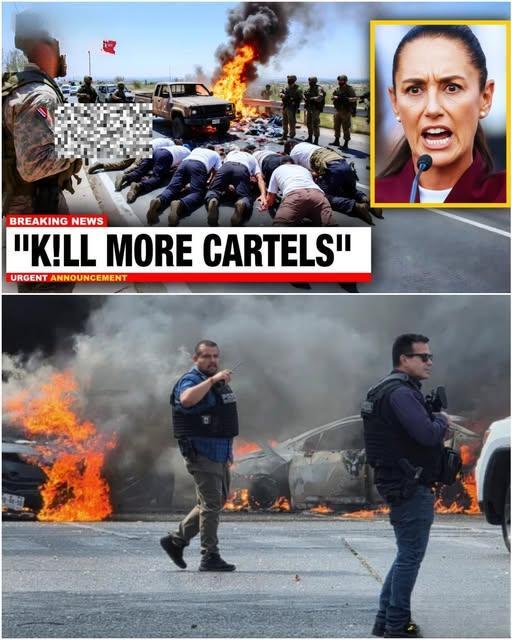
In early 2026, online headlines began circulating dramatic claims about a so-called “shadow war” in Uruapan, Michoacán, alleging that a secret brigade authorized by President Claudia Sheinbaum carried out an ambush targeting members of the Cártel Jalisco Nueva Generación (CJNG). These reports described cinematic confrontations and covert units operating outside conventional law enforcement structures.
However, when evaluating such narratives, it is essential to rely on confirmed information from reputable institutions and established media outlets. As of this writing, no official documentation from Mexican federal authorities substantiates claims of a clandestine brigade conducting an off-the-books ambush in Uruapan.
This article provides a comprehensive, fact-based overview of the security landscape in Michoacán, the documented presence of CJNG in the region, the federal strategy under President Sheinbaum, and the broader importance of verifying information in complex security environments.
Uruapan and Michoacán: A Region with Ongoing Security Challenges
The city of Uruapan, located in the western Mexican state of Michoacán, has long faced security challenges linked to organized crime activity. The state’s geographic location and economic significance—particularly in agriculture and export markets—have made it strategically important for both legitimate commerce and illicit networks.
According to official data from Mexico’s National Public Security System and coverage by established outlets such as Reuters and Associated Press, Michoacán has experienced fluctuating levels of violence over the past decade, often tied to competition among organized criminal groups.
Uruapan, sometimes referred to as the “Avocado Capital of the World” due to its agricultural output, plays a central role in the region’s economy. Its commercial relevance has also made it a focal point for federal security deployments aimed at maintaining public order and protecting economic activity.
The Documented Presence of CJNG
The Cártel Jalisco Nueva Generación has been identified by both Mexican and U.S. authorities as one of the country’s most prominent organized crime groups. The organization has been subject to sanctions by the U.S. Treasury Department and is referenced in public assessments by the U.S. Drug Enforcement Administration (DEA).
Reports from Mexican federal agencies and international observers confirm that CJNG has operated in multiple states, including Michoacán. However, experts caution that criminal dynamics in Mexico are fluid. Alliances shift, rivalries evolve, and local conditions can change rapidly.
Academic researchers, including those affiliated with the National Autonomous University of Mexico (UNAM), have noted that organized crime structures are not static entities but adaptive networks influenced by enforcement pressure, economic incentives, and internal disputes.
Federal Security Strategy Under President Claudia Sheinbaum
Since taking office in late 2024, President Claudia Sheinbaum has emphasized a security approach rooted in institutional coordination and intelligence-based operations. Public communications from Mexico’s Secretariat of Security and Citizen Protection (SSPC) outline a strategy built on:
- Intelligence gathering and data analysis
- Coordination between federal and state authorities
- Deployment of the National Guard
- Judicial oversight through warrants and prosecutorial review
There has been no verified public record confirming the creation of a “secret brigade” operating outside established military or law enforcement frameworks. Security operations in Mexico are typically conducted by recognized institutions, including:
- The Mexican Army (SEDENA)
- The National Guard
- State police forces
- Federal prosecutors
Large-scale operations are usually accompanied by official press releases and are often covered by multiple independent news organizations.
How Modern Security Operations Are Conducted
Contemporary law enforcement operations in Mexico increasingly rely on intelligence tools rather than spontaneous confrontation. Verified reporting from Reuters and the Associated Press describes a structured process that generally includes:
- Advance Intelligence Collection
Authorities gather information through surveillance, informant testimony, and inter-agency collaboration. - Judicial Authorization
Arrest warrants and search warrants are typically issued by judges before operations proceed. - Coordinated Deployment
Units from the National Guard or armed forces are dispatched in coordination with state authorities. - Post-Operation Reporting
Official summaries detail arrests, seizures, and procedural outcomes.
This institutional framework differs significantly from online narratives suggesting unauthorized or clandestine strike teams.
Evaluating Claims of a “Secret Brigade”
Viral headlines often use dramatic language—terms such as “shadow war” or “secret brigade”—to capture attention. However, responsible reporting requires corroboration from credible sources.
If a large-scale ambush of the type described in online narratives had occurred, several indicators would likely be present:
- Official statements from SEDENA or SSPC
- Confirmation from multiple national news outlets
- Statements from local authorities in Uruapan
- Coverage by international agencies such as Reuters or the Associated Press
As of this publication, no such comprehensive confirmation exists regarding the alleged covert brigade.
The absence of verified documentation does not negate ongoing security efforts; rather, it highlights the importance of distinguishing between confirmed events and speculative accounts.
Oversight and Legal Accountability
Security operations in Mexico are subject to constitutional and legal constraints. Allegations of misconduct—particularly claims involving extrajudicial actions—would typically prompt investigations by:
- Federal prosecutors
- Internal military oversight bodies
- Mexico’s National Human Rights Commission (CNDH)
- Independent civil society organizations
Human rights groups, including Amnesty International, regularly monitor security practices and report on compliance with national and international legal standards.
Public statements from the Sheinbaum administration have reiterated commitments to due process and adherence to constitutional safeguards.
The Role of Media Literacy in Security Reporting
In an era of rapid digital information exchange, headlines can spread widely before verification occurs. Security issues—especially those involving organized crime—are particularly susceptible to sensational framing.
Media literacy experts emphasize several key practices for readers:
- Cross-reference claims with established news outlets
- Look for official statements from recognized institutions
- Be cautious of anonymous sources without corroboration
- Distinguish between opinion commentary and factual reporting
Responsible journalism plays a critical role in maintaining public trust during complex security developments.
Community Impact in Uruapan
For residents of Uruapan, security operations have tangible, everyday implications. Increased patrols, temporary road checkpoints, and visible military presence can alter daily routines.
Local businesses may adjust operating hours during heightened security activity. Schools sometimes coordinate with authorities to ensure student safety. Civil society organizations often call for transparent communication to reduce uncertainty among residents.
While enforcement measures aim to improve long-term stability, community leaders frequently stress that security policy must balance effectiveness with respect for civil rights and economic continuity.
International Dimensions
Security developments in Michoacán are closely watched beyond Mexico’s borders. Bilateral cooperation between Mexico and the United States includes intelligence sharing and coordination on transnational crime investigations.
Publicly documented actions have included:
- Sanctions against CJNG-linked individuals
- Extradition requests
- Joint task force initiatives
However, operational decisions within Mexican territory remain under Mexican jurisdiction. International partners typically provide support within established diplomatic frameworks.
Broader Policy Considerations
Experts widely agree that addressing organized crime requires more than enforcement alone. Sustainable progress often depends on:
- Strengthening judicial institutions
- Professionalizing police forces
- Expanding economic opportunities
- Investing in education and community programs
President Sheinbaum’s administration has publicly stated that security policy will integrate social investment initiatives alongside targeted enforcement actions.
Policy analysts note that rapid-response operations may disrupt criminal networks in the short term, but long-term stability depends on structural reforms.
Transparency and Public Trust
Transparency is central to public confidence in security policy. Mexico’s freedom of information laws allow journalists and citizens to request government records, subject to national security limitations.
Investigative journalists frequently examine official data, court filings, and financial disclosures to evaluate policy effectiveness.
If an operation of extraordinary scale had occurred—particularly one involving unconventional tactics—documentation would likely emerge through formal channels, oversight reviews, or independent reporting.
To date, no verified documentation confirms the existence of a clandestine brigade conducting a major ambush in Uruapan consistent with viral descriptions.
The Importance of Evidence-Based Reporting
Security environments are inherently complex. Emotive language can amplify public concern, but sustainable public understanding depends on verified facts.
Readers seeking reliable updates may consult:
- Official statements from Mexico’s Secretariat of Security and Citizen Protection
- Press releases from SEDENA
- Coverage by Reuters and the Associated Press
- Academic analyses from recognized research institutions
Careful reliance on documented sources helps ensure that public discourse remains grounded in evidence rather than speculation.
Conclusion: Ongoing Efforts and the Need for Verified Information
Uruapan and the broader state of Michoacán continue to navigate evolving security challenges. The presence of the Cártel Jalisco Nueva Generación in parts of Mexico is well documented by both Mexican and international authorities. Federal operations targeting organized crime are part of an institutional framework involving intelligence gathering, judicial authorization, and coordinated deployment.
However, claims of a secret brigade conducting a dramatic ambush in Uruapan are not supported by publicly verified evidence at this time.
As security efforts continue under President Claudia Sheinbaum’s administration, accurate reporting and institutional transparency remain essential. Responsible journalism, oversight mechanisms, and informed public engagement contribute to a clearer understanding of complex developments.
In a rapidly changing information landscape, separating confirmed facts from viral narratives is not merely an academic exercise—it is fundamental to democratic accountability and informed civic dialogue.