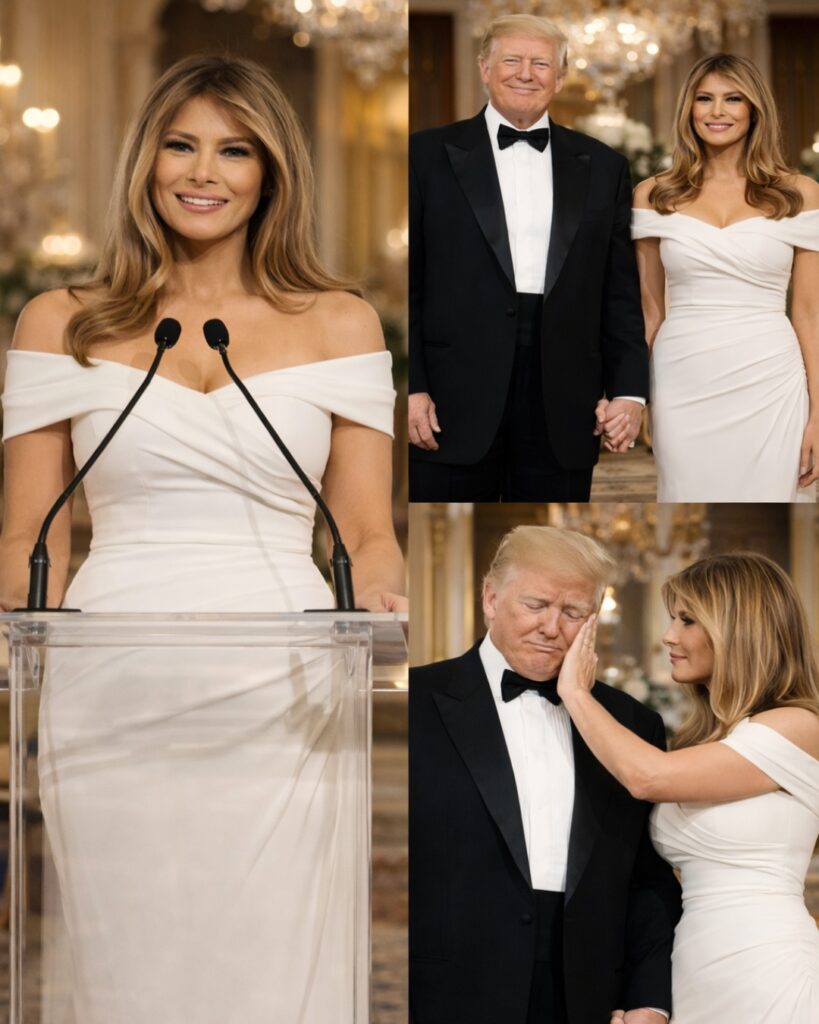
It was billed as a formal fundraising gala — an evening of speeches, structured remarks, and predictable applause. The ballroom shimmered with crystal chandeliers and polished marble floors. Donors, political allies, longtime friends, and media representatives filled the room. The program was printed. The schedule was tight. Nothing about the night suggested deviation.
Donald Trump sat in the front row, posture straight, expression composed. It was the familiar image the public had seen for decades: controlled, observant, rarely revealing emotion in settings designed for optics. He did not wave to the crowd. He did not interrupt with commentary. He simply watched.
When Melania Trump stepped onto the stage, the room responded with polite applause. Many expected a short, graceful address — something measured and ceremonial. Instead, what followed surprised nearly everyone.
Melania began by speaking about her journey to the United States, about adapting to a new culture and language, and about raising a son under intense public scrutiny. Her tone was calm, deliberate. But as she shifted from biography to reflection, something changed.
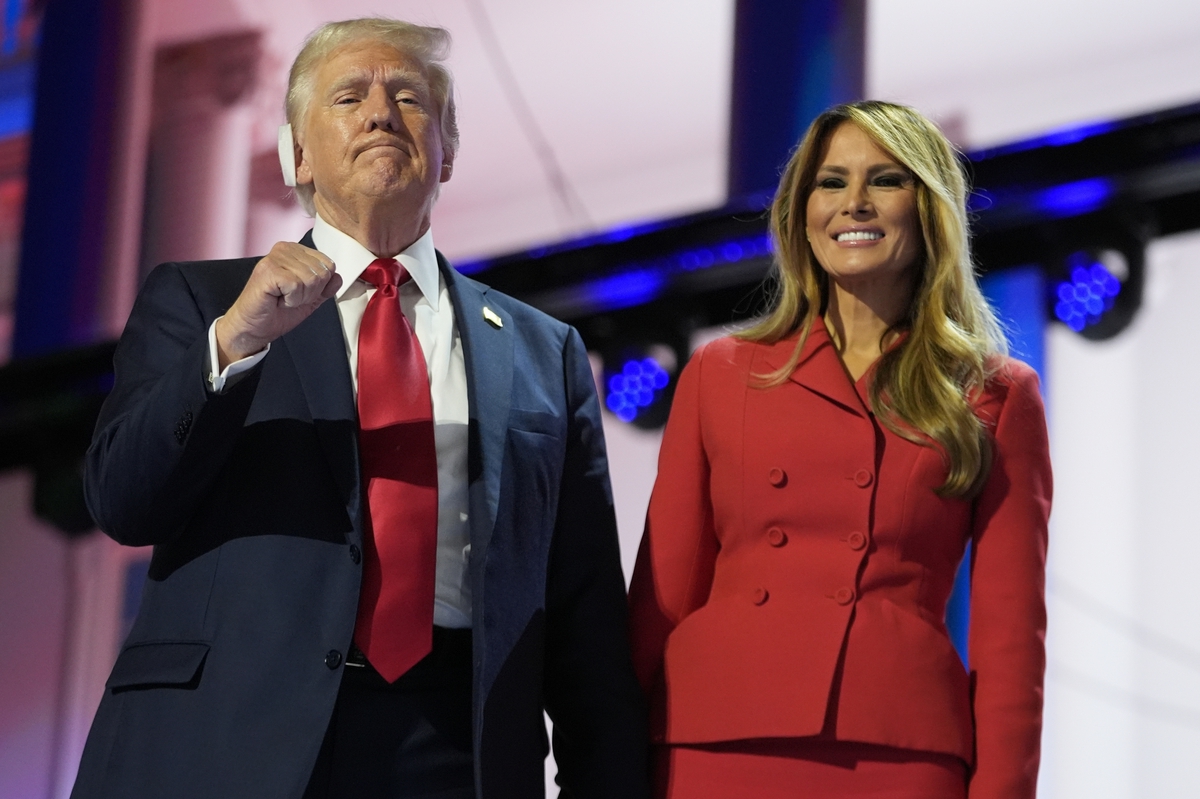
She spoke about the invisible cost of public life — the scrutiny, the assumptions, the relentless headlines. She described nights when the lights were off and the cameras gone, when the house was finally quiet. “Public life can look strong from the outside,” she said. “But strength is often built in private.”
Her voice wavered once — not from uncertainty, but from emotion.
The ballroom, accustomed to applause cues, grew still. No one checked their phones. No one whispered. It no longer felt like a political event. It felt personal — almost as though the audience had been invited into a living room rather than a ballroom.
She spoke about marriage. Not in slogans, not in grand declarations, but in specifics. She described disagreements weathered away from cameras. She acknowledged criticism and pressure that tested both of them. And then she said something that drew a visible reaction from the front row.
“Marriage is not built on perfect days,” Melania said. “It is built on choosing each other on imperfect ones.”
Donald Trump’s expression remained composed, but those seated nearby noticed his gaze never left her.
When she concluded, the applause was slower to build than usual — not because the audience was unenthusiastic, but because many seemed momentarily reflective. She lowered her notes and stepped back from the microphone.
There was a pause.
Trump stood.
There was no dramatic music cue. No spotlight shift. He walked toward the stage steadily, eyes fixed only on her. The room sensed something unscripted was happening. Staff members near the teleprompter glanced at each other; there was no prepared segment for this.
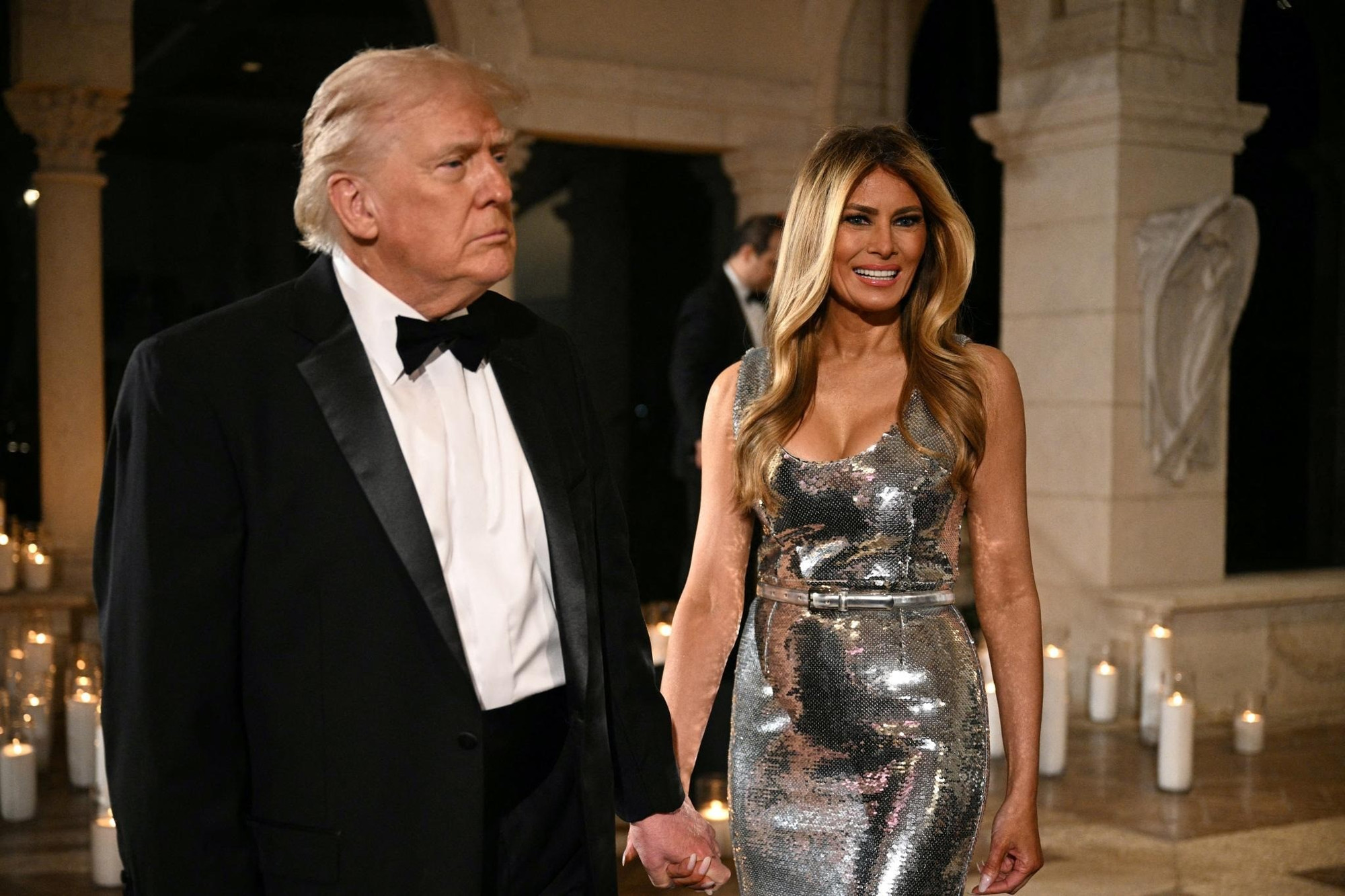
When he reached the stage, he did not take the microphone.
Instead, he extended his hand.
Melania looked at him briefly — surprised, but smiling — and placed her hand in his. The gesture was small, almost understated. Yet in a room built on spectacle, its simplicity felt powerful.
The applause returned, louder this time.
Then Trump did something even more unexpected: he asked for the microphone — not to deliver a speech, but to respond.
“I wasn’t planning to say anything tonight,” he began. “But sometimes you hear something that deserves an answer.”
He turned slightly toward Melania.
“Public life can be loud,” he said. “And it can be difficult. But what most people never see are the quiet conversations. The decisions made without cameras. The patience. The loyalty.”
He acknowledged that their years together had not been free of challenges. “No marriage is,” he added. “But what you said is true. You choose each other — again and again.”
The audience listened carefully. This was not the assertive cadence of a campaign rally. His tone was measured, almost reflective.
He continued, “I’ve stood on many stages. I’ve had many moments in front of crowds. But the most important moments of my life have never been public. They’ve been private — at home, with family, with her.”
Melania’s eyes filled with tears, though she maintained composure.
Trump then folded a small piece of paper he had taken from his jacket pocket — a handwritten note. He explained that earlier in the week, he had written down something he wanted to say but wasn’t sure he would.

“I wrote this because sometimes it’s easier to put words on paper than to say them out loud,” he admitted.
He read it plainly.
It was not political. It was not strategic. It was a brief message of gratitude — thanking Melania for resilience, for protecting their son from unnecessary exposure, for maintaining dignity under criticism, and for standing beside him during moments both triumphant and turbulent.
“I know the world sees strength,” he read. “But I see sacrifice.”
When he finished, he folded the paper again and handed it to her.
There were no grand gestures beyond that. No dramatic embrace designed for headlines. Just a quiet exchange, followed by sustained applause from a room that understood it had witnessed something genuine.
As the evening resumed and guests mingled, conversations shifted. Attendees spoke less about policy discussions and more about what they had seen between the couple. Several longtime supporters described it as one of the rare occasions when the public and private personas seemed to align.
An event designed around messaging had instead highlighted marriage.
In a space known for calculation, the most memorable moment had been unscripted.
Long after the chandeliers dimmed and the ballroom emptied, one detail lingered in conversations: the way he had stood without fanfare, walked without performance, and extended his hand without needing words.
For a man accustomed to commanding attention, that night he chose something different.
He chose to stand beside her.