A row at the BAFTA Film Awards in London has triggered a broad backlash after a racial slur was heard during the ceremony while two Black actors were on stage, prompting apologies from BAFTA and the BBC and renewed scrutiny of how broadcasters handle offensive language that can arise from disability-related vocal tics.
The incident occurred early in Sunday night’s ceremony at the Royal Festival Hall as actors Michael B. Jordan and Delroy Lindo appeared on stage to present the award for special visual effects. A profoundly offensive term was audible in the auditorium and later during the BBC’s broadcast. Both men paused briefly before continuing with the presentation, according to accounts of the moment and the broadcast.
BAFTA identified the person responsible as John Davidson MBE, a long-time Tourette syndrome campaigner whose life story inspired the film I Swear. In a statement issued on Monday, BAFTA said it had taken steps to warn those in attendance that Davidson was present and that they might hear strong language, involuntary noises or movements during the ceremony. The organisation said the slur was heard as Jordan and Lindo were on stage and offered an unreserved apology to them and to others affected. “Michael B. Jordan and Delroy Lindo were on stage at the time, and we apologise unreservedly to them, and to all those impacted,” BAFTA said, adding: “We would like to thank Michael and Delroy for their incredible dignity and professionalism.”
BAFTA said Davidson has Tourette syndrome and has “devoted his life to educating and campaigning for better understanding” of the condition, adding that Tourette syndrome “causes involuntary verbal tics, that the individual has no control over” and that such tics “are in no way a reflection of an individual’s beliefs and are not intentional”. BAFTA said Davidson chose to leave the auditorium and watch the rest of the ceremony from a screen.
During the BBC broadcast, host Alan Cumming addressed viewers directly, warning that they “may have heard some strong and offensive language tonight” and linking the disruption to I Swear and to Tourette syndrome. He told viewers that Tourette syndrome is “a disability and the tics you have heard tonight are involuntary, which means the person who has Tourette syndrome has no control over their language,” before adding: “We apologise if you were offended.”
The BBC later issued its own apology and acknowledged the failure to remove the slur before transmission, despite the ceremony being broadcast after a delay. In a statement carried by ITV News, a BBC spokesperson said: “Some viewers may have heard strong and offensive language during the Bafta Film Awards 2026. This arose from involuntary verbal tics associated with Tourette syndrome, and was not intentional. We apologise for any offence caused by the language heard. We apologise that this was not edited out prior to broadcast, and it will now be removed from the version on BBC iPlayer.” ITV reported that the programme was removed from iPlayer following the incident.
Davidson also released a statement describing himself as “deeply mortified” and emphasising that his vocal tics are involuntary. “I am, and always have been deeply mortified if anyone considers my involuntary tics to be intentional or to carry any meaning,” he said, according to ITV. He thanked BAFTA and those involved in the awards “for their support and understanding and inviting me to attend the broadcast,” and said he appreciated an announcement made in advance of the recording “warning everyone that my tics are involuntary and are not a reflection of my personal beliefs”. He said he was “heartened by the round of applause that followed this announcement and felt welcomed and understood in an environment that would normally be impossible for me”.
Davidson added that he left the auditorium early because he was “aware of the distress my tics were causing”. He described attending to celebrate I Swear, saying the film explains the “origins, condition, traits and manifestations” of Tourette syndrome, and said he would continue trying to “support and empower the Tourette’s community” and “to teach empathy, kindness and understanding”.
Tourette’s Action, a charity focused on the condition, also urged understanding while acknowledging the harm caused. In a statement quoted by ITV, the charity said it “deeply understand[s] that these words can cause hurt” but said it is “vital that the public understands a fundamental truth about Tourette syndrome, tics are involuntary. They are not a reflection of a person’s beliefs, intentions or character”. The charity added that people with Tourette’s “can say words or phrases they do not mean, do not endorse and feel great distress about afterwards,” and stressed: “These symptoms are neurological, not intentional.”
Medical experts note that Tourette syndrome is characterised by sudden, involuntary movements or sounds called tics that can wax and wane and may worsen with excitement or anxiety. Only a minority of people with Tourette syndrome experience coprolalia, a type of involuntary vocal tic that can include swearing or socially unacceptable words. An Associated Press report cited the Tourette Association of America as saying roughly 10% to 15% of people with the syndrome experience coprolalia.
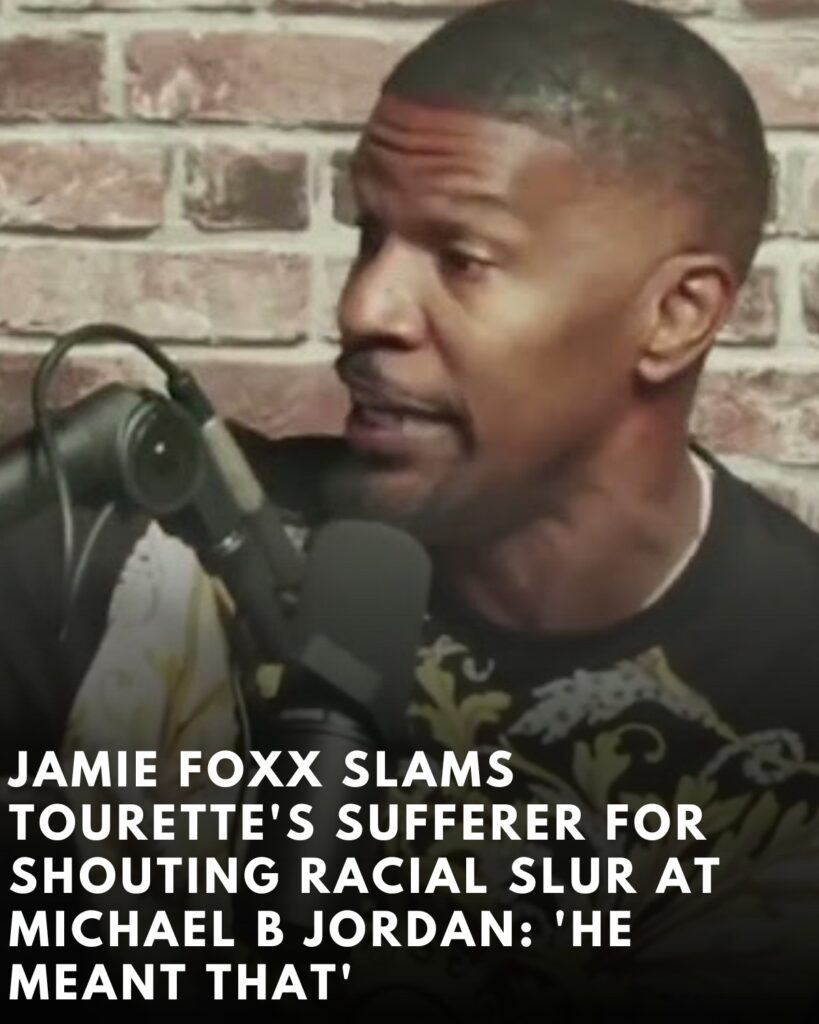
Even as disability advocates called for nuance, the moment sparked sharp criticism online, with the central focus on the impact of hearing a racial slur directed into a space where two Black presenters were required to continue the broadcast live. Actor Jamie Foxx posted on Instagram in reaction to a clip of the moment, describing the outburst as “unacceptable” and questioning it. He wrote: “Out of all the words, you could’ve said Tourette’s makes you say that?” and added: “Nah he meant that s**t.”
Actor Wendell Pierce also condemned the handling of the incident, writing on X that it was “infuriating” that the first response was not “complete and full throatted apologies” to Lindo and Jordan.
The episode has left BAFTA and the BBC facing questions from viewers and public figures about editorial safeguards and duty of care at major live events, as well as about the language used in apologies and the prioritisation of those harmed by slurs. BAFTA said it “take[s] full responsibility for putting our guests in a very difficult situation” and promised it would learn from the incident while keeping inclusion “at the core” of its work.