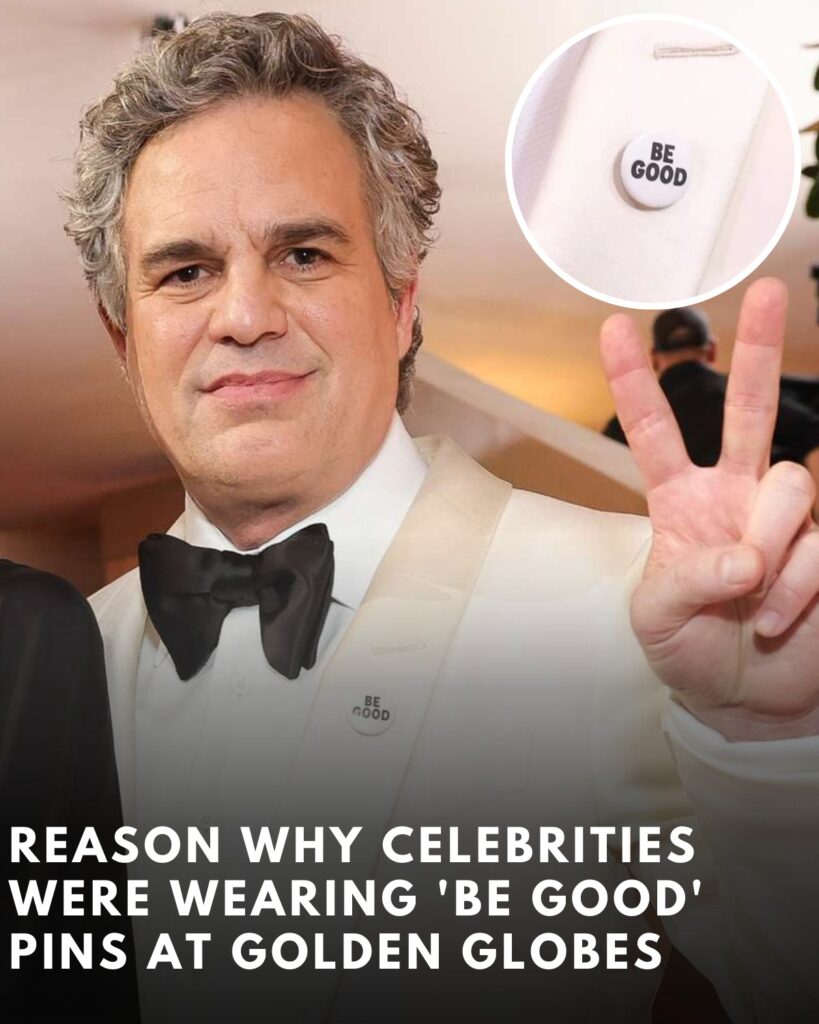
Celebrities arriving at the Golden Globes in Los Angeles this week drew attention for an accessory that was not part of any designer lookbook: small circular pins bearing short messages including “Be Good” and “ICE Out”, worn in apparent protest after the fatal shooting of Renée Nicole Good by an Immigration and Customs Enforcement officer in Minneapolis.
The pins, seen on several actors, filmmakers and other attendees on the red carpet, have been linked by organisers to a campaign launched in the wake of Good’s death and the shooting of a second man, Keith Porter, by an off-duty ICE officer on New Year’s Eve in Minneapolis. The campaign has been promoted by groups including Working Families Power and the Make America Good Again Creative Council, which said the pins were intended to signal opposition to what it described as escalating federal immigration enforcement and its impact on local communities.
Good, 35, was killed last week during an encounter with federal immigration officers that sparked several days of demonstrations in Minneapolis and drew sharp political disagreement over what happened in the moments before she was shot. Federal officials, including Homeland Security Secretary Kristi Noem, have defended the officer’s actions as self-defence. Local leaders, including Minneapolis mayor Jacob Frey, have disputed that account and demanded greater scrutiny of the federal investigation.
According to reporting from US outlets, Good was in her vehicle during an ICE operation when an officer fired into the car. The Trump administration and Noem have asserted that Good attempted to run over an officer, a claim Frey has publicly challenged, citing video recorded on mobile phones that circulated online. Speaking on NBC’s Meet the Press, Frey urged the public to review the footage and said it showed a different sequence of events. “You don’t need to take my word for it. You don’t need to take their word for it. Watch the video,” he said. He also said he had “deep mistrust” of federal agencies investigating the shooting and called for state agencies to be involved.
The dispute has played out in the open, with federal and local officials issuing competing statements as protests spread beyond Minnesota. Noem accused Frey and Minnesota governor Tim Walz of fuelling unrest. “They’ve extremely politicized and inappropriately talked about this situation on the ground in their city. They’ve inflamed the public,” Noem said, according to Time magazine. “They’ve encouraged the kind of destruction and violence that we’ve seen in Minneapolis these last several days.”
Minneapolis police have said most demonstrations have been peaceful, though authorities reported arrests during some gatherings. The mayor, while condemning property damage, has repeatedly framed the protests as a response to Good’s death and to wider concerns about immigration enforcement operations in the city.
It is against that backdrop that the Golden Globes pins have entered the national conversation. In statements cited by US fashion and entertainment outlets, organisers described the accessories as a visible show of solidarity with Good’s family and with those protesting ICE activity. Teen Vogue reported that the Make America Good Again Creative Council said in a statement: “We are deeply saddened by the tragic deaths of Renée Nicole Good and Keith Porter, both of whom were killed by ICE officers in Minneapolis.” The group added that it was launching the “Be Good” campaign “to challenge the cruelty and violence of ICE and the Trump administration”.

Vogue reported that the pins were created by the campaign and distributed with the aim of encouraging conversation during the awards season, framing the message as a call for accountability and a rejection of fear. The slogan “Be Good” has been presented by organisers as both a moral appeal and a reference to Good’s surname, an attempt to keep her identity at the centre of the political dispute over her death.
While red-carpet protests are not new in Hollywood, the timing has given the gesture added weight. The Golden Globes are among the first major entertainment industry events of the year, and their global television audience makes them an unusually prominent platform for political signals. Attendees have previously used pins and badges to highlight causes including gun control, reproductive rights and labour disputes, but the focus on a specific incident involving an immigration enforcement agency has sharpened the partisan edge.
The campaign’s focus on Porter has also drawn attention. Porter was shot on New Year’s Eve by an off-duty ICE officer, according to ABC7 and other US outlets. His death, campaign organisers say, has been cited alongside Good’s as evidence of what they characterise as a pattern of aggressive behaviour by officers involved in immigration enforcement. Authorities have provided limited public detail about the incident, and it has not attracted the same volume of viral footage as the encounter that ended with Good being shot.
Federal officials have defended the Minneapolis operations as part of broader immigration enforcement efforts under the Trump administration. The Department of Homeland Security has not publicly accepted wrongdoing in Good’s death, and the officer involved has been named in some US reports as Jonathan Ross. The White House and Noem have continued to describe the shooting as justified, while local leaders and activists have called for independent oversight.
In Minneapolis, the case has reignited long-running tensions over policing and federal intervention. The city became a focal point of national protest movements after the murder of George Floyd in 2020, and the re-emergence of street demonstrations following Good’s death has revived comparisons, even as officials stress the events are different in scale and context.
The political stakes are also high. Immigration enforcement has been a central priority for the administration, and the government has sought to portray criticism of ICE operations as politically motivated. Noem’s remarks suggested federal officials believe local Democrats are stoking unrest for partisan ends. Frey and Walz, by contrast, have argued that public anger is being fuelled by what they say is a misleading federal narrative about the circumstances of Good’s shooting.
The spread of the “Be Good” and “ICE Out” pins into celebrity culture reflects the way the story has moved rapidly from local tragedy to national flashpoint. Activist networks have used social media to amplify footage and personal details about Good, while opponents have argued that celebrities and campaigners are oversimplifying a volatile encounter.
Organisers have attempted to keep the messaging focused on the individuals involved rather than broader slogans. In their public statements, they have highlighted Good’s name, her age, and the fact she was killed during an ICE operation, while pointing to Porter’s death as part of the same call for accountability. Supporters say the point of the pins is to create visibility in a media environment often dominated by fashion coverage during awards season.
For now, the official investigations into both deaths remain underway, and key factual disputes about Good’s shooting continue to hinge on video evidence and the interpretation of events immediately before the officer opened fire. Frey has called for the FBI to allow state involvement, arguing that the public cannot have confidence in a process controlled solely by federal agencies whose actions are under scrutiny.
As Hollywood’s awards circuit continues, campaigners have indicated they hope the pins will be worn at further events, keeping attention on Good and Porter while pressure builds on federal authorities to provide a fuller account of what happened. Whether the gesture shifts the political calculus in Washington is unclear, but in the immediate aftermath of Good’s death it has ensured that a Minneapolis shooting, and the arguments around it, have reached an audience far beyond Minnesota.