The John F. Kennedy Presidential Library and Museum said environmental journalist Tatiana Schlossberg, a granddaughter of former US president John F Kennedy, has died after a battle with leukaemia. She was 35.
In a statement posted on social media, the Kennedy Library Foundation, speaking on behalf of her extended family, said: “Our beautiful Tatiana passed away this morning. She will always be in our hearts.” The statement did not give further details.
Schlossberg was the middle child of Caroline Kennedy, the only surviving child of President Kennedy and Jacqueline Kennedy Onassis, and Edwin Schlossberg, an artist and designer. Her death prompted tributes and renewed attention on an essay she published about her illness, in which she described the shock of being diagnosed with leukaemia and the effect of treatment on her young family.
The Kennedy family has long been a subject of intense public scrutiny in the United States, in part because of its political legacy and in part because of a series of high-profile tragedies stretching back decades. In her recent writing, Schlossberg acknowledged that history and described her fear of “adding another tragedy” to her family’s story as she confronted her own diagnosis.
Schlossberg’s byline had become familiar to readers of environmental and politics coverage in recent years. She was known for reporting and commentary on climate change, energy policy and the ways in which government decisions shape the natural world. Friends and colleagues described her as a careful writer who worked to translate complex scientific and political debates into clear, accessible reporting.
In the months before her death, Schlossberg wrote publicly about the physical and emotional toll of leukaemia treatment. In an essay published by The New Yorker as part of its Weekend Essay series, she described receiving a terminal diagnosis following the birth of her second child, and the emotional whiplash of planning for the future while being told time might be short.
The same New Yorker page describing her essay noted that Schlossberg had written about “her fear of adding another tragedy to her family’s life”, an allusion to the assassinations, accidents and illnesses that have repeatedly brought the Kennedys into the national spotlight.
Social media posts mourning Schlossberg circulated quickly after the family statement appeared, including reposts of the Kennedy Library message and extracts of her words about illness, motherhood and the disorienting shift from a normal life to one dominated by medical routines and uncertainty.
Her death also arrived amid a politically charged moment for the wider Kennedy family, which includes relatives who have taken sharply different positions in public life. Those divisions have drawn attention in recent years, particularly as members of the family have spoken publicly about political candidates and policy choices, sometimes in ways that have underscored the gap between the Kennedy legacy and the modern US political landscape.
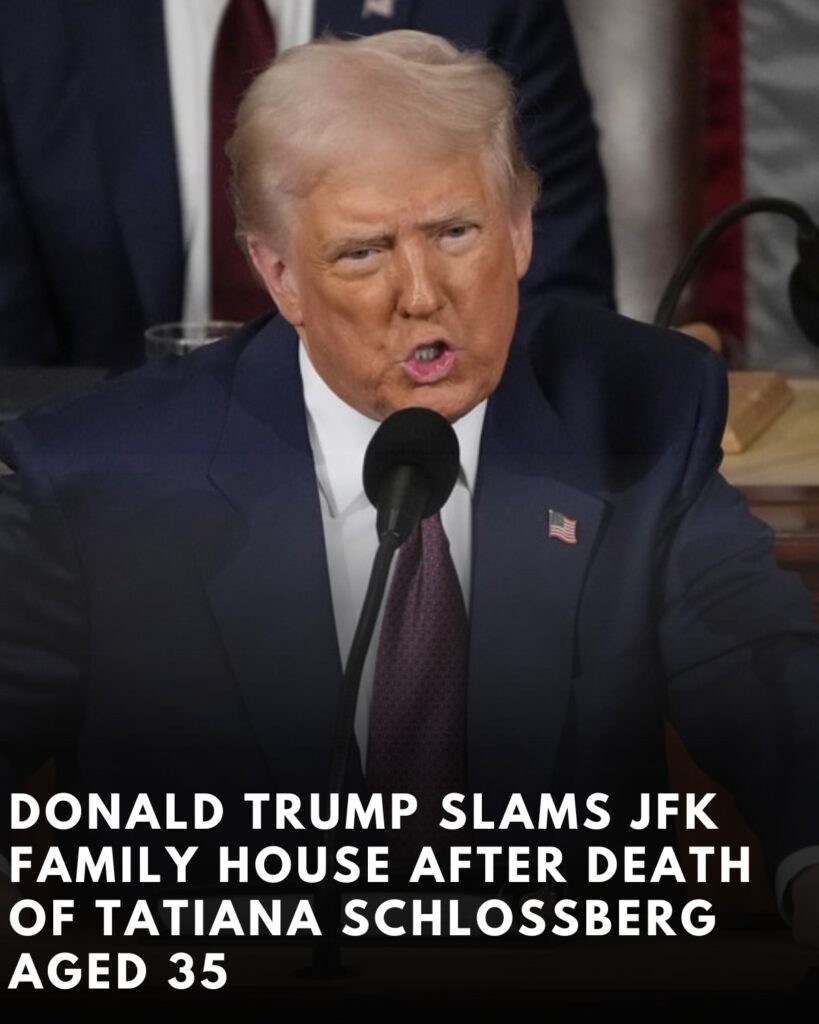
Within hours of the announcement, the story became entangled in partisan commentary online. President Donald Trump, who has frequently attacked prominent political families and critics, posted about the Kennedys on social media around the same time the family was being mourned by supporters and strangers alike, prompting a wave of angry and defensive reactions in comment sections. While the details of those exchanges varied across platforms, the broader pattern of political conflict surrounding the Kennedy name was again visible as condolences and criticism collided.
Schlossberg’s illness was not widely discussed in mainstream political debate until she chose to write about it herself. In doing so, she joined a long tradition of journalists using personal experience to illuminate public issues, particularly around healthcare, medical research and the unequal burdens of serious illness. Her writing described not only her own pain and fear but also the practical realities of appointments, scans and the gradual reshaping of daily life around treatment schedules.
The Kennedy Library statement did not specify where she died or the circumstances of her final days, and the family has not, in the posts reviewed, released additional information beyond the brief announcement.
Schlossberg’s death leaves a gap in a generation of Kennedys that has been less publicly political than their forebears, but still prominent. Caroline Kennedy served as US ambassador to Japan during the Obama administration and has remained a well-known public figure. Schlossberg’s own work, however, was rooted in journalism rather than electoral politics, and she built her career on reporting rather than on the family name.
In the weeks after her essay was published, readers circulated excerpts as a form of testimony about the brutal randomness of leukaemia and the altered sense of time that often accompanies terminal illness. Her writing described the tension between hope and realism, and the effort to remain present for loved ones even as the future narrows.
For many who responded online, the Kennedy Library’s short statement served as both a private family notice and a public reminder of the human stories that sit beneath famous surnames. “Our beautiful Tatiana passed away this morning,” the family said. “She will always be in our hearts.”