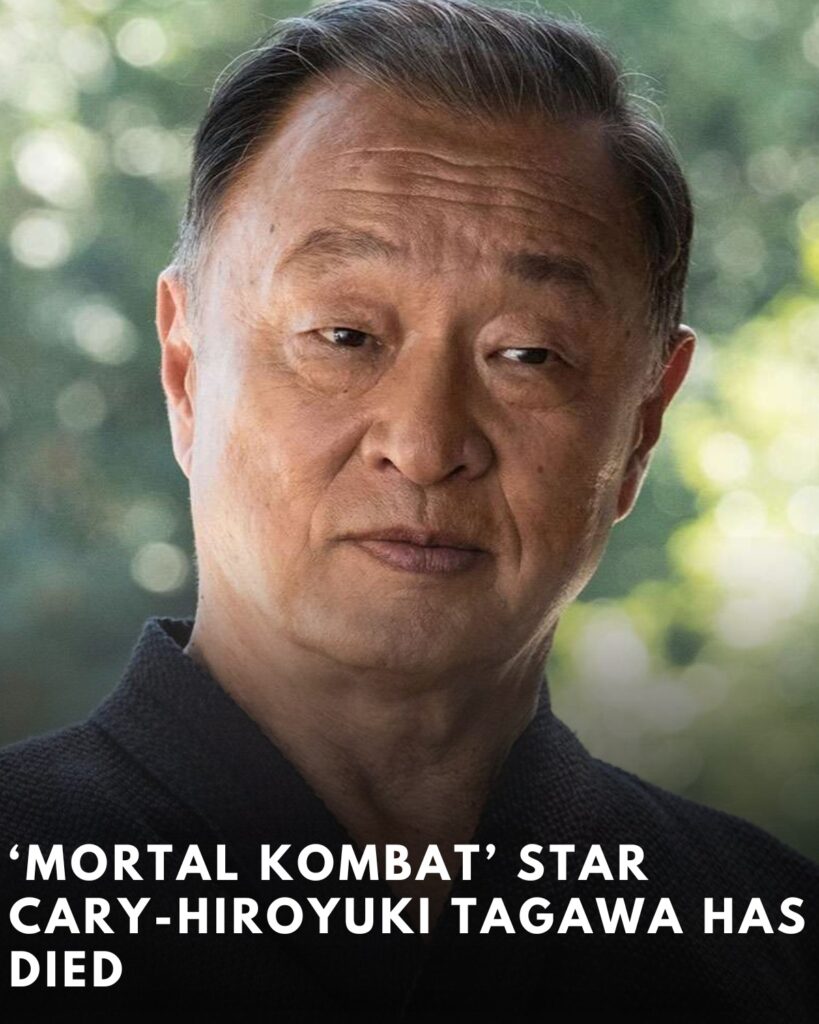
Cary-Hiroyuki Tagawa, the Japanese-born actor whose presence, stare and voice turned him into one of cinema’s most recognisable villains, has died at the age of 75 after complications from a stroke in Santa Barbara, California. His manager, Margie Weiner, confirmed that Tagawa died on Thursday morning from stroke-related complications and said he passed away surrounded by family. His death closes a four-decade career that stretched from epic historical dramas to science fiction television and, above all, to his defining role as the soul-stealing sorcerer Shang Tsung in the Mortal Kombat franchise.
Tagawa’s family roots and early life shaped the mixture of discipline and theatricality that later made him stand out on screen. He was born in Tokyo on 27 September 1950, the son of Japanese stage actress Mariko Hata and a Japanese American father serving in the United States Army. Because of his father’s postings, the family moved repeatedly through bases including Fort Bragg in North Carolina, Fort Polk in Louisiana and Fort Hood in Texas before settling in Southern California. English and Japanese were both spoken at home and Tagawa later picked up Russian, Korean and Spanish, reflecting the international life that was still to come.
It was at Duarte High School in California that he first stepped on to the stage in school productions, discovering acting relatively late compared with many of his peers. He went on to attend the University of Southern California and spent time as an exchange student in Japan, where he deepened his training in martial arts, studying kendo and Shotokan karate under renowned instructor Masatoshi Nakayama at the Japan Karate Association. For several years he worked outside the industry in a variety of jobs, from teaching martial arts to doing stunt work, before turning fully to acting in his mid-thirties.
His break came when director Bernardo Bertolucci cast him in the 1987 historical epic The Last Emperor. Tagawa played the eunuch Chang, a relatively small part in a lavish production but one that put him on the radar of casting directors and launched a steady run of work across film and television. Roles in major studio projects followed at a rapid pace. He appeared in the James Bond film Licence to Kill, the crime drama American Me, the action film Showdown in Little Tokyo and Michael Crichton adaptation Rising Sun, often playing formidable antagonists whose calm exterior concealed explosive violence.
That screen persona reached its most enduring form in 1995, when he was cast as Shang Tsung in the film adaptation of the video game Mortal Kombat. The character, a sorcerer who feeds on the souls of defeated fighters, could easily have been a one-note villain. Instead, Tagawa made him a gleefully malevolent presence, combining martial arts choreography with theatrical line readings that resonated with audiences far beyond the world of the arcade. His delivery of the line “Your soul is mine” became a catchphrase for the franchise and remains quoted by fans decades later.

The role turned Tagawa into a cult figure among action and gaming fans and followed him for the rest of his life. He reprised Shang Tsung in the web series Mortal Kombat: Legacy, in the 2019 video game Mortal Kombat 11 and again in the mobile game Mortal Kombat: Onslaught in 2023, providing both his likeness and voice. For many players, his performance became inseparable from the character itself and helped set a template for how video game villains could be portrayed in live action.
Yet Tagawa’s career ranged far beyond a single franchise. On television he worked steadily in American series from the late 1980s onward, appearing in shows including MacGyver, Star Trek: The Next Generation and Nash Bridges. He found a later-career showcase in Amazon’s alternate-history drama The Man in the High Castle, where he played Japanese trade minister Nobusuke Tagomi. The character, wrestling with questions of conscience and fate in a world carved up by fascist powers, allowed Tagawa to display a quieter, more introspective side. Viewers and critics praised the warmth and spirituality he brought to Tagomi, a contrast with the ruthless antagonists he often portrayed.
Film roles continued alongside television work. Tagawa appeared in Snow Falling on Cedars, Pearl Harbor, Planet of the Apes, Memoirs of a Geisha and the martial arts film Tekken, among many others, usually in characters linked to the military, organised crime or mystical power. In later years he joined the ensemble of the stop-motion fantasy Kubo and the Two Strings and worked on international co-productions stretching from Hollywood to Asia and Eastern Europe.
Behind the scenes, Tagawa developed his own approach to martial arts training, which he described as being focused on healing and inner balance as much as combat. AP reported that he created a method called Ninjah Sportz, a system he said was designed for both recovery and athletic performance. He later taught a style called Chu Shin, which he presented as a way of aligning body and spirit, and he continued to work with students and younger performers even while maintaining a busy acting schedule.
His spiritual journey became a significant part of his public identity in his later years. In 2015 he converted to Eastern Orthodoxy and was baptised in the Russian Orthodox Church. Not long afterwards he obtained Russian citizenship alongside his American nationality. Reflecting on that decision, he said in an interview that he was not simply following a celebrity trend. “I’m not following the new trend,” he explained, adding, “I follow my heart. There are no easy decisions either in America, or anywhere else in the world. This will be a new challenge for me.” Those comments captured the blend of conviction and risk-taking that had characterised his move into acting in the first place.
Tagawa was also outspoken about the roles available to Asian and Asian American performers in Hollywood. In documentaries exploring representation on screen he criticised stereotypes that portrayed Asian men as weak or one-dimensional and argued that playing powerful antagonists could be preferable to passive heroes if that was the only way to avoid humiliation. Colleagues have recalled that he was generous on set with advice about martial arts, film fighting and the industry, and younger actors have described him as a mentor whose off-screen warmth contrasted with the cold menace of many of his characters.
His career was not without controversy. In 2008 Tagawa pleaded guilty to a misdemeanour harassment charge in a case reported by AP, receiving a sentence that included probation and community service. He later continued to work steadily in film and television, and the incident remained a relatively little-known footnote compared with his on-screen legacy.
In his final years Tagawa lived on the Hawaiian island of Kauai while maintaining professional ties across the Pacific and in Eastern Europe. He kept working into his seventies, with recent credits including voice and motion-capture projects, and he remained active in martial arts instruction.
News of his death prompted an immediate wave of tributes from fans and colleagues across social media. On forums dedicated to Mortal Kombat, users repeatedly posted clips and stills of Shang Tsung, many captioned with his line “Your soul is mine,” treating the catchphrase as both an in-joke and an expression of affection. Artists shared illustrations of the character and of Tagawa himself, while players who had grown up with the 1995 film described how his performance had frightened and fascinated them as children. Others highlighted his more recent work in The Man in the High Castle, saying his departure from the series had left it feeling, in one viewer’s words, “so… soulless,” a pointed nod to the role that first made him famous.
Official accounts from the Mortal Kombat community and fan pages also marked his passing, sharing behind-the-scenes photographs and clips of him on set, smiling between takes in contrast to the grim sorcerer he portrayed. Many of the tributes emphasised the same qualities mentioned by friends and journalists over the years: a performer who could project danger with the smallest movement, yet who was by most accounts approachable and generous in person.
Tagawa is survived by his wife, Sally, his children Calen, Byrnne and Cana, and two grandchildren, River and Thea Clayton. For them and for those who worked with him, the loss is personal. For audiences across several generations, his death marks the passing of an actor whose career traced the changing role of Asian performers in mainstream cinema, from background heavies to complex, central figures. From the imperial courts of The Last Emperor to the dystopian streets of The Man in the High Castle and the fantastical arenas of Mortal Kombat, Cary-Hiroyuki Tagawa built a body of work that combined physical mastery with a distinct, unsettling charisma.
That combination ensured that even when he appeared briefly on screen, he was rarely forgotten. In the days since his death, fans revisiting his films and television series have repeatedly returned to the same scene from Mortal Kombat in which Shang Tsung leans into the camera, eyes gleaming, and utters the line that stayed with them for thirty years. The fictional sorcerer promised that his victims’ souls were his. The response now, from the people who watched Cary-Hiroyuki Tagawa’s work across decades, is to insist that his performances belong to them still.