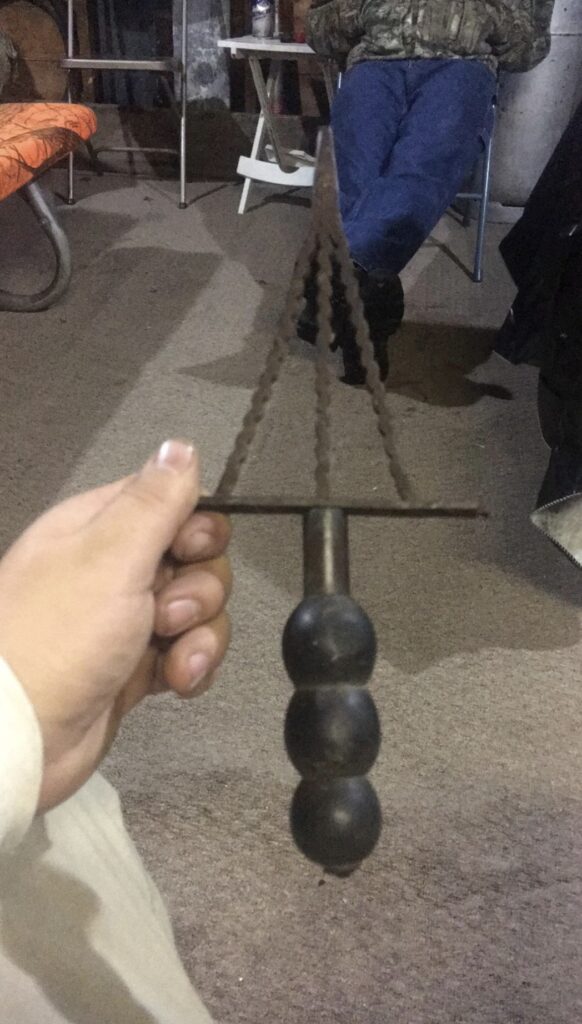
What looked like a menacing tool was really a small act of protection from another era. Before electric irons, heavy cast-iron “sad irons” were heated on stoves until painfully hot. A rest with chains let someone set that iron down safely, cradled above the table so wood didn’t scorch, fabric didn’t smolder, and a long day of ironing didn’t turn into a household disaster. The hanging chains formed a sling, allowing air to move around the iron so it cooled more evenly while staying steady and upright.
Many of these stands were made in two pieces, which is why the top often survives alone, stripped of its horseshoe-shaped base and its obvious purpose. Found in a garage or barn, it invites wild guesses, yet its real story is quieter: ordinary work, careful hands, and a home where even laundry demanded toughness and ingenuity. It’s not a weapon. It’s proof someone once fought heat and time with simple iron and chain.