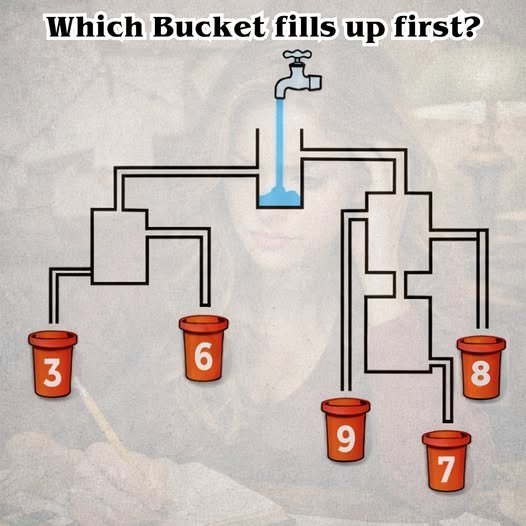
What makes this water-pipe puzzle so revealing is not the final answer, but how confidently people get it wrong. We see numbers, positions, and “obvious” shortcuts, and our brains instantly build a story: lower numbers must fill first, closer buckets must win, everything that looks connected must be open. The drawing quietly punishes all of those lazy assumptions.
When you slow down and trace only the genuinely open pipes, everything changes. Buckets 3, 6, and 7 are doomed from the start—their paths are blocked, no matter how promising they appear. The only uninterrupted route leads to bucket 9, so that’s the one that fills first. Beneath the simplicity, the puzzle is a sharp reminder: in real life, as in riddles, details decide outcomes, not appearances or expectations.