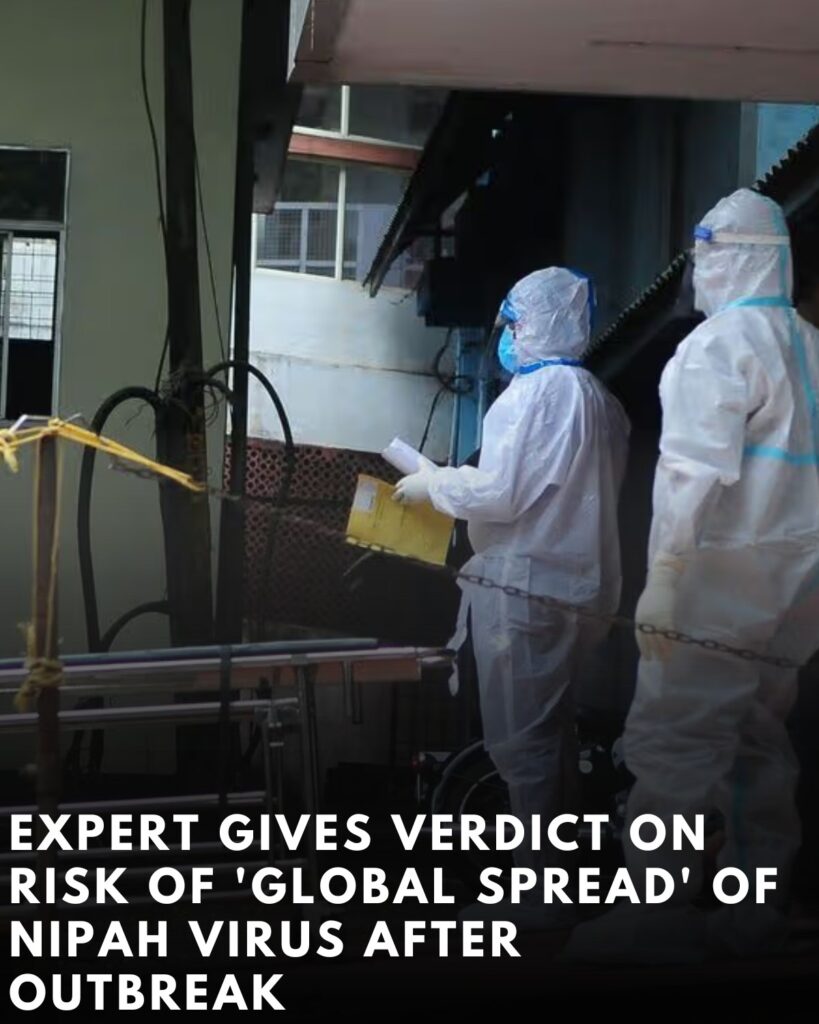
Health authorities in India have moved to contain two confirmed cases of Nipah virus in the eastern state of West Bengal, as neighbouring countries tightened airport screening and surveillance amid renewed concern about a pathogen that the World Health Organisation classifies as a priority due to its epidemic potential.
India’s health ministry said late on Tuesday that officials had identified and traced 196 contacts linked to the two infections, with none showing symptoms and all testing negative. A district health officer told Reuters the two patients were healthcare workers and both were receiving treatment at a local hospital.
The cases, confirmed after infections detected in late December, prompted several countries across Asia to increase checks for arrivals from India. Thailand and Malaysia were among those to step up screening in airports, and Pakistan also introduced additional measures, according to Reuters reporting on January 28 and January 29.
In the UK, infectious disease specialists said the risk of wider international spread remains limited, while stressing that the disease itself can be severe. Professor Paul Hunter, an infectious diseases expert at the University of East Anglia, told the Manchester Evening News that Nipah virus was “unlikely to pose a significant risk of global spread”, citing low levels of person-to-person transmission, but said it causes a “very serious infection”. He added: “Although Nipah is a very serious infection, it is unlikely to pose a significant risk of global spread as the risk of person-to-person transmission is low. The R0, the number of people that one infected person will pass on a virus to, is less than 1.0.”
Hunter cautioned, however, against complacency, warning that viral evolution can change the threat profile and that long incubation periods can complicate border detection efforts.
The UK Health Security Agency has echoed that the risk to most people in Britain remains very low, but has urged travellers to be aware of how Nipah spreads and the symptoms it can cause. In an explainer published on January 27, UKHSA said: “It is estimated that between 40 and 75% of people infected with Nipah virus will die,” adding that some survivors can be left with long-term neurological problems and that, in rare instances, the virus can reactivate months or years later. UKHSA said no cases have ever been detected in the UK.
Nipah virus is a zoonotic infection, meaning it can spread between animals and humans, and, in some circumstances, from person to person. The virus is carried by fruit bats, often referred to as flying foxes, and outbreaks have been linked to contaminated food and drink, including fruit and raw or partially fermented date palm sap that can become contaminated by bat saliva or excreta.
The World Health Organisation says Nipah infection in humans can range from asymptomatic disease to acute respiratory illness and fatal encephalitis. It estimates the case fatality rate at between 40% and 75%, noting that the proportion can vary significantly depending on the outbreak and local capacity for surveillance and clinical care.
Symptoms can begin with fever, headache, muscle pain, vomiting and sore throat, and some patients develop dizziness and altered consciousness that can progress to encephalitis, seizures and coma. Respiratory symptoms can occur, and severe cases may deteriorate quickly. WHO notes an incubation period typically ranging from four to 14 days, but also reports that incubation as long as 45 days has been recorded, a factor that public health officials say can make it harder to identify infected travellers before they become unwell.
There is no specific antiviral treatment proven to cure Nipah virus infection, and clinical care is largely supportive, focusing on managing complications such as respiratory distress and neurological inflammation. WHO says management includes supportive care and treatment of symptoms.
In comments reported by the Manchester Evening News, Ian Jones, professor of virology at the University of Reading, said the people most at risk in an outbreak are typically those with sustained close exposure to primary cases. “The at-risk groups are therefore close family members and the healthcare workers who treat the primary cases,” he said. “The risk to the general public from Nipah is essentially nil as the virus has never shown any evidence of general spread.”
Public health experts have long regarded Nipah as a potential emerging infectious threat because of its severity and the lack of a widely available vaccine, even though sustained human-to-human transmission has historically been limited. The virus was first identified during a major outbreak in Malaysia and Singapore in 1998 and 1999, associated with transmission from pigs to people and causing hundreds of human infections. Since then, repeated outbreaks have been reported in Bangladesh and India, often linked to spillover from bats and occasional person-to-person transmission, including in healthcare settings.
The latest cases in West Bengal have revived scrutiny of how quickly authorities can contain clusters when they arise. Reuters reported that India’s health ministry said contact-tracing was completed and that those identified had tested negative, a sign officials were seeking to prevent any onward spread beyond the initial exposure network.
The London School of Hygiene and Tropical Medicine, in a rapid-reaction commentary, said India’s health ministry had confirmed two cases in West Bengal since December 2025 among healthcare workers, and that traced contacts had tested negative for infection, highlighting the importance of infection-control measures and rapid surveillance in limiting transmission.
Even as experts emphasise the low likelihood of a sustained global outbreak under current conditions, the response in airports across Asia reflects heightened sensitivity to emerging infections after the Covid-19 pandemic, and the practical challenge posed by diseases with severe outcomes and incubation periods long enough to complicate screening. For travellers, UKHSA advice focuses on awareness rather than alarm, noting that risk remains low but that people should understand how the virus is acquired in affected areas and seek medical care if they become unwell after travel.