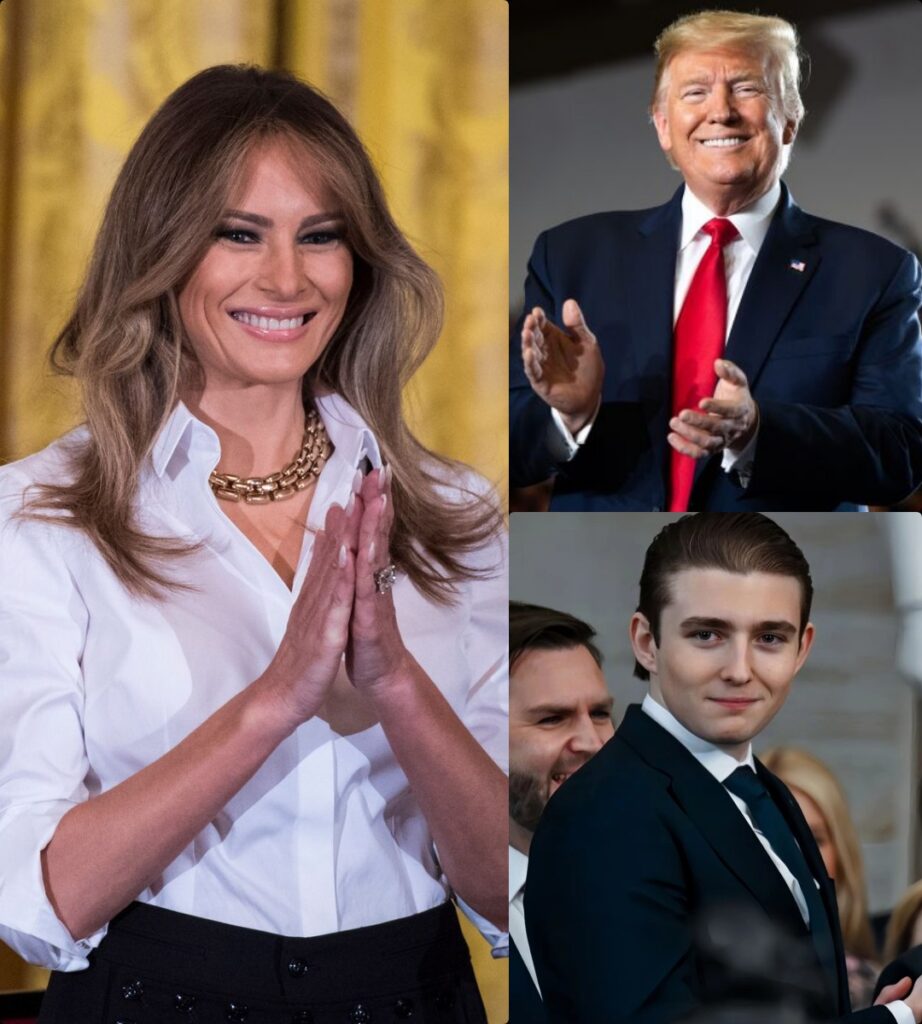
There were no speeches scheduled for that moment. No microphones were raised. No cameras were repositioned. Yet what unfolded between Melania Trump and her son Barron quietly became the most talked-about detail of the day.
The setting itself was unremarkable by Washington standards—a formal public engagement attended by invited guests, staff members, and a small press pool. The atmosphere was orderly, polite, and predictable. Melania Trump fulfilled her role with the composure long associated with her public appearances: poised, restrained, and attentive. Barron, now older and more visibly self-assured, stood nearby, largely unnoticed amid the routine flow of the event.
Nothing suggested that the moment to come would matter.
As the gathering moved toward its conclusion, conversations resumed in low tones. Guests shifted their attention elsewhere. It was, by all accounts, an ordinary transition—the kind that usually passes without comment.
Then, without drawing attention to himself, Barron stepped closer to his mother.
There was no announcement. He did not seek the center of the room or wait for acknowledgment. He simply leaned slightly toward Melania and spoke quietly, his voice low enough that only those closest could hear. Witnesses later confirmed that his words were brief and direct:
“I’m proud of you.”
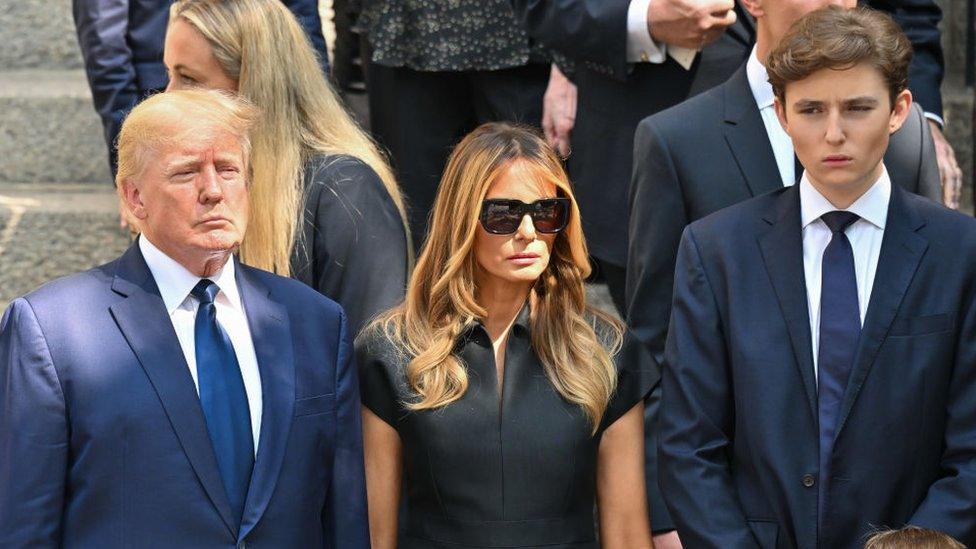
It was not a rehearsed statement or a symbolic gesture meant for public consumption. It was unmistakably personal—a son speaking to his mother, not to an audience.
Melania paused.
Those who have observed her over the years know how rarely she breaks composure in public. Yet in that instant, her expression changed. She did not respond verbally. Instead, she placed her hand briefly over Barron’s, nodded once, and took a breath that suggested she was steadying herself.
The room noticed.
Conversations tapered off. Several guests stopped mid-sentence, sensing something had shifted. There was no cue, no signal, just a collective awareness that something private had occurred in a public space.
Moments later, applause began—not loud or exuberant, but sustained and respectful. It was not prompted by protocol. It arose organically, as if those present understood they had witnessed something genuine and chose to acknowledge it without intruding.
For Melania Trump, the exchange stood in contrast to the expectations often placed upon her role. As First Lady, she has been scrutinized, analyzed, and interpreted through countless lenses. Yet here, she was not performing a duty or delivering a message. She was simply a mother receiving affirmation from her child.
Observers noted that she briefly lowered her gaze, her posture softening before she regained composure. It was a subtle shift, but unmistakable. Those nearby later described the moment as “unguarded” and “human in a way we don’t often see in public figures.”

Barron, for his part, did not linger. After speaking, he stepped back to his original position, offering no further explanation. He did not look toward the audience or acknowledge the applause. The gesture was complete.
What made the moment resonate was precisely its restraint.
In an era dominated by spectacle—where public figures often communicate through grand statements, staged moments, and viral soundbites—this interaction stood apart. There was no attempt to amplify it. No one rushed to frame it as a headline. Yet within minutes, those present were quietly sharing what they had seen, not out of sensationalism, but because it felt meaningful.
Several attendees later remarked that the exchange reframed their perception of both Melania and Barron. It suggested a relationship grounded in mutual respect rather than ceremony, and a family dynamic that exists beyond the glare of public life.
Importantly, nothing about the moment overshadowed the purpose of the event itself. There was no disruption or redirection of attention. Instead, it served as a reminder that even within formal settings defined by protocol and visibility, authentic human connections can surface unexpectedly.
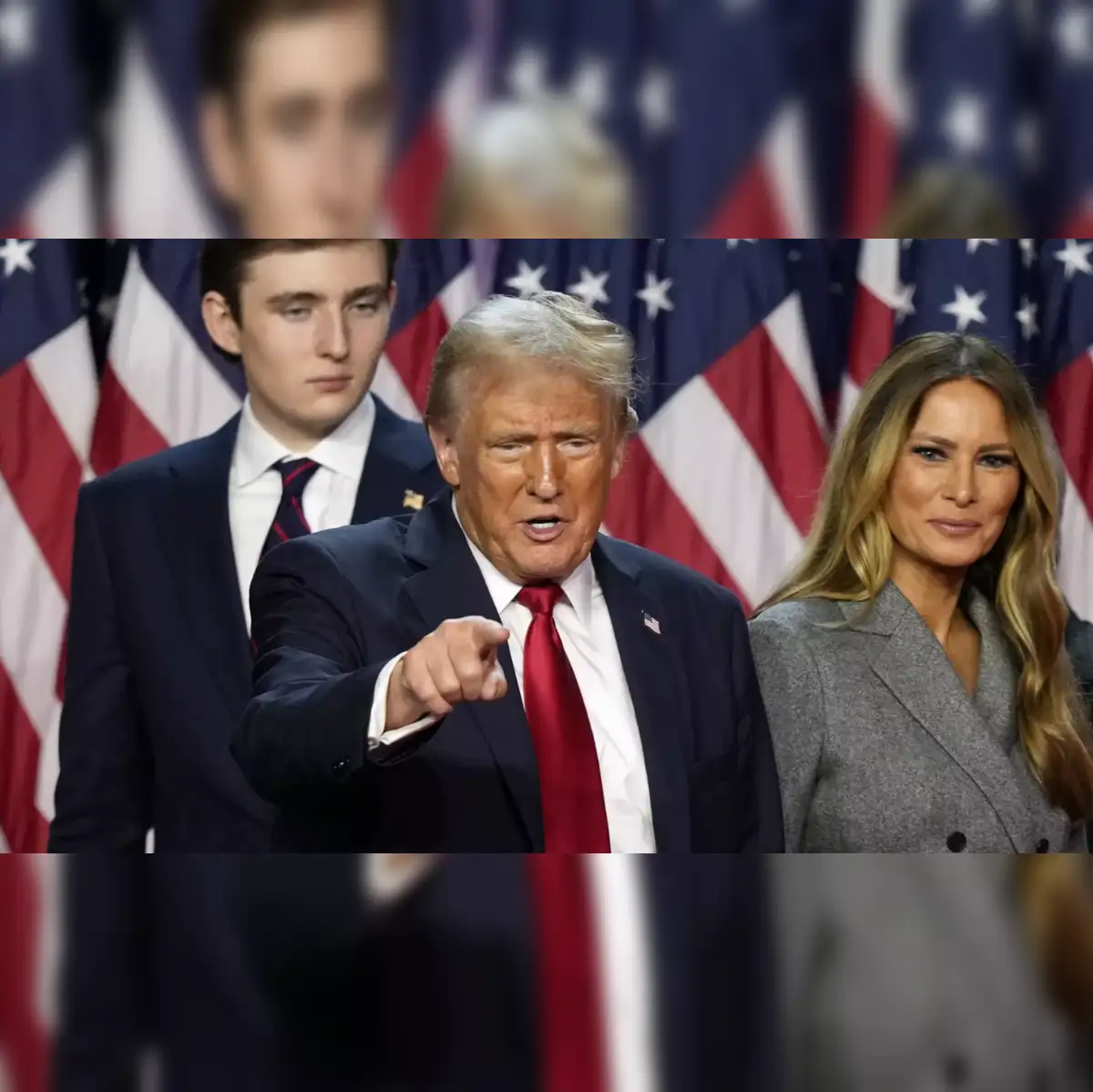
By the time the gathering concluded, the applause had faded and the room returned to its usual rhythm. Yet the impression lingered.
In conversations afterward, people did not discuss policy, appearances, or optics. They spoke about a son who chose to express pride, and a mother who received it without performance. They spoke about how quiet gestures can carry more weight than scripted remarks.
In a public world often shaped by noise, that silence mattered.
No official statement followed. No clarification was issued. None was needed.
Sometimes, the moments that endure are not the ones designed to be remembered. Sometimes, they happen quietly—between two people who momentarily forget the audience and speak only to each other.
And sometimes, those moments change how everyone else sees them.