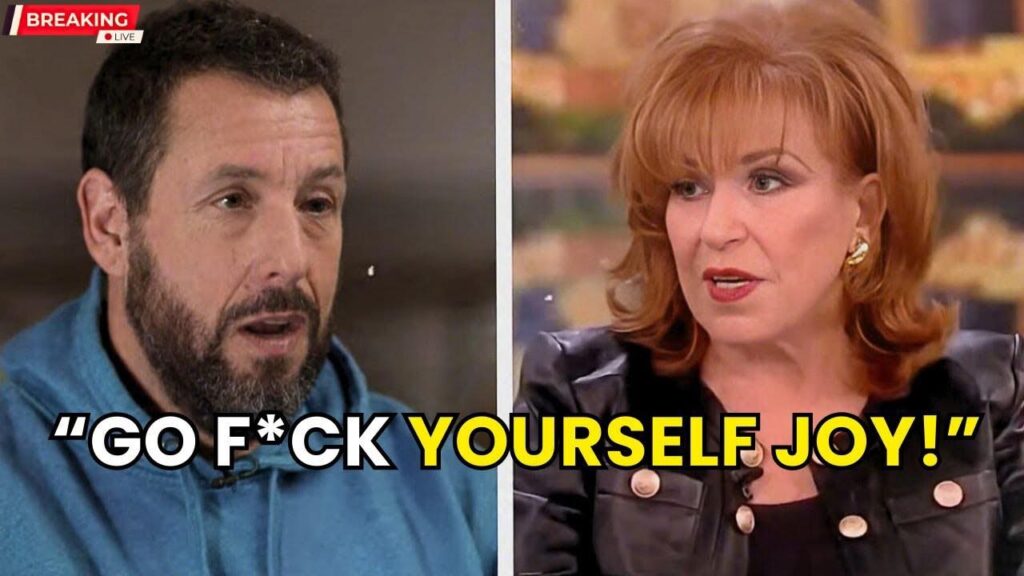
The moment the cameras went live, the atmosphere shifted sharply. What was expected to be a light promotional exchange quickly hardened into something tense and confrontational, catching viewers off guard.
Adam Sandler remained seated and composed as the tone changed. Rather than matching the intensity, he stayed calm, choosing restraint over reaction as the questioning grew sharper.
Joy Behar pressed forward, pushing the conversation beyond casual banter. What began as pointed curiosity edged toward interrogation, altering the rhythm of the segment in real time.
The contrast between them became striking. Sandler’s stillness and measured responses stood against Behar’s escalating frustration, creating a slow, uncomfortable unraveling on live television.
As the exchange continued, the tension became impossible to ignore. Viewers could sense the imbalance, the moment where control slipped and professionalism gave way to raw emotion.
Behar ultimately reached a breaking point. She removed her microphone and walked off set, leaving the conversation unresolved and the audience stunned by the abrupt ending.
Sandler did not pursue the moment or capitalize on it. His silence after her exit carried weight, allowing the unanswered question to linger without commentary or rebuttal.
What remained was not a viral insult or dramatic punchline, but an awkward pause that said more than words could. The segment became a reminder of how quickly live television can shift—and how restraint can sometimes speak louder than confrontation.