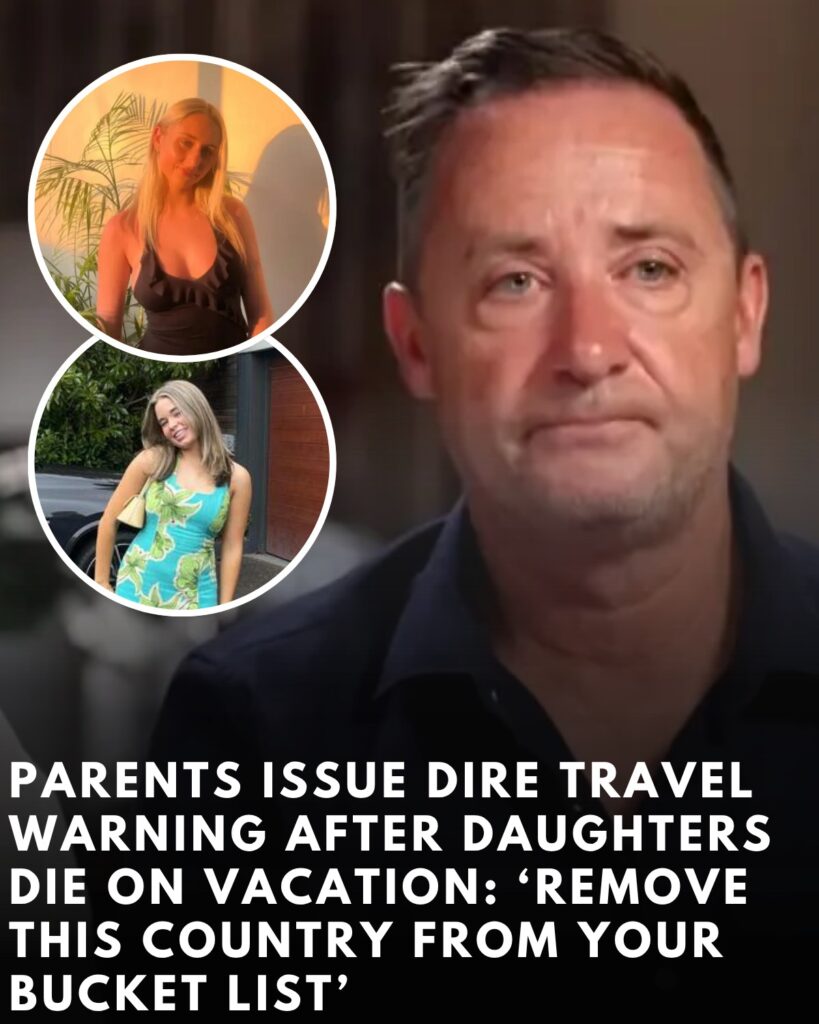
The parents of two Australian teenagers who died after drinking suspected tainted alcohol in Laos have urged travellers to strike the country from their plans, escalating a months-long campaign for accountability they say has been met with silence and obstruction from authorities. In interviews published in Australia ahead of the first anniversary of the deaths of 19-year-olds Holly Morton-Bowles and Bianca Jones, their families accused the Lao government of failing to pursue a credible inquiry and called on Australians to avoid Laos until officials demonstrate meaningful progress. “We recognise how corrupt and unhelpful the Laos Government [is], there is no evidence whatsoever to suggest there is any type of investigation going on,” Holly’s parents, Shaun Bowles and Samantha Morton, said, adding that their “hope is that Australians remove this country from their bucket list, your life is worth nothing over there.”
Morton-Bowles and Jones, best friends from Melbourne, were backpacking in Vang Vieng in November last year, a riverside town long known for its party scene, when they fell critically ill after a night out that included free shots at the Nana Backpacker Hostel and drinks at another bar, according to multiple contemporaneous accounts. Both were transferred to hospitals in neighbouring Thailand, where they later died. Four other foreign tourists—a British woman, two Danish women and an American man—also died during the same cluster of suspected methanol poisonings, bringing the toll to six, and at least a dozen more people were reported hospitalised.

Methanol, a colourless industrial alcohol sometimes illicitly used to fortify or adulterate spirits, can cause blindness, organ failure and death in small quantities. Thai police later confirmed methanol poisoning as the cause of one of the deaths, while Australian, British and other foreign ministries updated travel advisories warning visitors to exercise extreme caution with locally produced spirits and mixed drinks. The case intensified long-standing concerns about unregulated alcohol in parts of South-East Asia, where enforcement is uneven and producers can operate informally.
In the immediate aftermath, Lao officials told foreign counterparts they were investigating. A government statement issued last November expressed “profound sadness” over the deaths and pledged to “bring the perpetrators to justice,” language the families initially took as a sign that progress might follow. But nearly a year on, the parents say they have received no substantive updates, no timeline, and no explanation for why no one has been held to account. “We’ve heard nothing,” Bianca’s father, Mark Jones, said in a broadcast interview, describing the lack of communication as intolerable as the first anniversary approached.
Lao authorities have said little publicly beyond the initial statement and limited comments by local police, who previously acknowledged detaining several people linked to the Nana Backpacker Hostel for questioning. The hostel’s manager and other staff were taken into custody late in November last year, though no charges were announced at the time. The hostel later ceased operating and removed its online presence. Local police also told reporters that free shots were given to guests the night the Australians began their evening, an account disputed by the hostel, which said the drinks in question did not come from its bar.
The families’ frustration is shared by others bereaved in the cluster. In March, Australian public broadcaster ABC reported that parents from Australia and Denmark had banded together to compare fragmentary information, alleging a pattern of opacity and pressure. “There’s been no communication, we’ve had no updates,” Mark Jones said, calling the process “horrendous” and alleging it “seems to reek of a cover-up.” He added that those initially detained—reported to be foreign nationals working in the local hospitality sector—had been released from custody and were understood to be under restrictions pending further inquiries.

Country officials have cited ongoing investigative steps when declining to meet families or foreign media. A senior Australian television journalist who attempted to pursue the story said Lao authorities refused interviews and denied her team access to the country while claiming the case was still active, a stance that has compounded relatives’ anger. Victorian Premier Jacinta Allan publicly acknowledged the families’ “very real” frustration over what they view as a stalled process that has delivered neither accountability nor transparency.
Beyond the open questions in the case files, policy responses in Laos have been uneven. Local health authorities in Vang Vieng moved to restrict the sale of certain local liquors after the deaths, and national officials shut a distillery in the capital region, according to Australian media. International reporting also cited a broader ban on particular local vodka and whisky brands, though central government confirmation was limited. The steps reflected concern that unregulated or counterfeit spirits had entered the tourist market, yet they fell short of the comprehensive regulatory campaign that victims’ families and safety advocates argued was necessary to restore confidence.
The suspected role of methanol in the deaths is consistent with trends across the region. Channel NewsAsia reported that authorities detained the hostel’s Vietnamese manager for questioning and named one of the victims as 28-year-old British lawyer Simone White, whose family described her as “a beautiful, kind and loving daughter” with “wonderful energy and spark for life.” That coverage echoed a wider pattern seen in incidents from Indonesia to Thailand: where inexpensive, high-proof spirit production in informal settings can elude oversight until a mass poisoning exposes systemic weaknesses.
For Vang Vieng, which has tried for years to pivot from a reputation for reckless tubing and bar crawls to a broader eco-tourism pitch, the case poses a reputational crisis. Tourism is a vital part of the Lao economy, and families say that reality is one reason authorities should have every incentive to demonstrate rigor and candour. Instead, they say, key venues linked to the victims’ final hours have reopened or resumed operations while the questions persist. “Make it a safe place,” Jones urged in March, calling for an overhaul that includes tracing supply chains, prosecuting wrongdoing where found, and establishing clear standards for alcohol served to tourists and locals alike.

For the Australian families, the past year has been marked by vigils, funerals and attempts to manage practical consequences, including crowdfunding to cover expenses and sponsor awareness and prevention campaigns around methanol poisoning. Their daughters were farewelled at services in Melbourne last December; their schools and local sports clubs paid tribute, and messages of condolence arrived from public figures including Australia’s prime minister. The grief, they say, has been compounded by the absence of answers. “I cannot have my daughter’s passing not mean anything,” Jones said, insisting that families will persist until a credible investigation yields findings.
Officials in Laos have previously said they would “find [the] causes of the incident and bring the perpetrators to justice,” but the families now point to the passage of time and the lack of public case milestones—such as charges, court dates or official investigative summaries—as evidence of inertia. Australian diplomats have continued to provide consular support and maintain contact with Lao counterparts, while travel advisories warn of the risks of methanol-adulterated alcohol and advise travellers to avoid local spirits, mixed drinks of unclear provenance, and venues where production and supply cannot be verified.

The death toll and the profile of the victims drew international attention at the time, with broadcasters reporting the sixth death within days of the first confirmed fatalities. Yet, nearly one year later, the parents say institutional candour remains scarce. In interviews this month they renewed their call for a boycott, framing it as leverage to force action in a case they fear may otherwise fade from view. “To date, no individual or organization has been held accountable,” Mark and Michelle Jones said, adding that it “appears these deaths of innocent young women may be forgotten, brushed aside and left unresolved.”
Toxicology and public health experts say methanol poisonings are preventable if regulators can choke off illicit supply and raise public awareness. Simple harm-reduction steps—avoiding unsealed bottles, shunning ultra-cheap shots and mixed spirits of uncertain origin, and seeking medical help quickly if symptoms such as vomiting, blurred vision or laboured breathing appear—are known to save lives when enforcement alone is not sufficient. After last year’s cluster in Laos, foreign governments reiterated the importance of those precautions, as well as the need to consider medical evacuation early when poisoning is suspected.
In Vang Vieng, some hospitality operators have attempted to distance themselves from the specific venues at the centre of the case. The Nana Backpacker Hostel told reporters last year that suspect drinks did not come from its bar, even as police questioned staff and seized supplies during the initial investigation. With the legal posture of those questioned still unclear, and the provenance of the alcohol that killed six people not publicly established, relatives argue that only a transparent, end-to-end trace of the supply chain—identifying where the methanol entered and who profited—will restore confidence. The calls echo demands seen after similar tragedies elsewhere, where officials have occasionally brought charges against distillers, distributors or bar operators found to have sold adulterated spirits.
The Australian families’ latest appeal is both a warning to would-be travellers and a message to the Lao state that the case will not recede. They have pressed for a meeting with senior officials, shared their documentation with media and lawmakers, and pledged to continue public advocacy until they see evidence of a thorough criminal inquiry. That effort now includes an explicit plea to avoid Laos as a destination—pressure they believe the tourism-dependent country will feel. Whether it leads to the accountability they seek may become clear only if Lao authorities move from generic expressions of sympathy to public, verifiable steps: naming suspects, setting court dates, publishing findings, and explaining why an incident that killed six foreign nationals in a single town was permitted to occur. For now, the parents’ message remains stark. They want Australians to strike Laos from their itineraries, and they want answers that match the gravity of what happened to their daughters.
The tragedy continues to reverberate beyond Australia. Families in Denmark and the United Kingdom have issued their own tributes and, in some cases, joined the push for change. The British victim, identified by her family as Simone White, was remembered by her law firm as a talented young solicitor with “a bright future ahead of her,” and British officials joined Australia in urging citizens to exercise caution with alcohol in Laos. The multinational character of the case underscores the stakes for a country seeking to attract long-haul visitors and regional backpackers alike. Without a clear accounting of how lethal methanol reached tourists’ glasses, the families warn, the risk—and the suspicion—will linger.
For the Bowles and Jones families, the coming days will be spent at memorials and in media interviews intended to keep their daughters’ names in public view. They say the campaign is not only about personal grief but about preventing the next poisoning. They want bars and hostels to be inspected, illicit distillers shut down, and a legal outcome that signals such conduct will be punished. Until then, they say, the only leverage they possess is to ask others not to go. Their critics may see a boycott as blunt pressure, but the parents argue it is the only tool that has a chance of forcing answers in a case where formal channels have failed them.
If Lao authorities deliver what they promised last November—an investigation that identifies causes and “brings the perpetrators to justice”—the families say they are ready to hear it. But they insist that justice, to be credible, must be visible. As the anniversary passes, their demand is simple: tell the world what happened in Vang Vieng, ensure it cannot happen again, and, at last, give six families the truth.