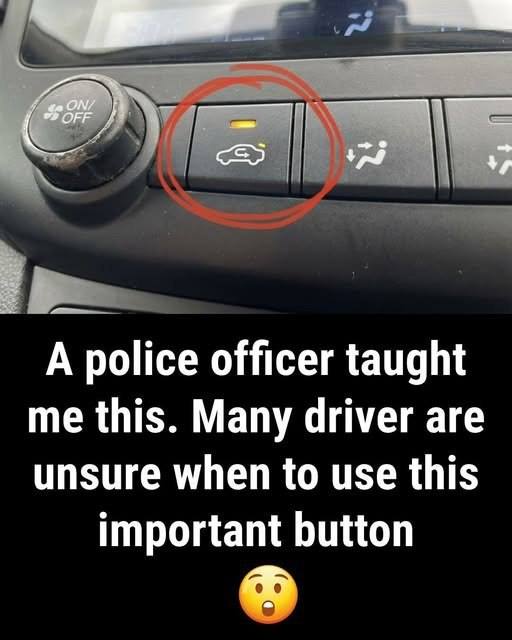
Most drivers tap it without thinking. Some leave it on forever. Others never touch it at all. Yet that small dashboard icon — the car with a circular arrow — quietly shapes how your body feels every time you drive. Used with intention, it protects you from pollution, heat, and allergens. Used carelessly, it can leave you foggy, uncomfortable, and oddly drained by the time you arrive.
That button controls your vehicle’s air recirculation system. When activated, your car stops pulling air from outside and instead cycles the air already inside the cabin. On hot days, this is one of the most effective ways to cool your car quickly. Because the system is cooling air that’s already been cooled, your AC works faster and more efficiently, reducing strain on the system and helping you feel comfortable sooner.
Recirculation is also valuable in specific environments. Heavy traffic, tunnels, construction zones, wildfire smoke, diesel trucks, strong odors — all of these are moments when outside air is something you don’t want. Turning recirculation on during these situations creates a temporary barrier, reducing the amount of exhaust, particulate matter, and irritants entering the cabin. For people with allergies or asthma, this can make a noticeable difference, especially when paired with a clean cabin air filter.
But this feature has limits — and that’s where many drivers go wrong.
Because recirculation continuously reuses the same air, moisture and carbon dioxide slowly build up. Over time, the cabin can feel stale or heavy. Windows may begin to fog, particularly in cold or rainy weather. Some drivers even report feeling sleepy or mentally dull on long trips when recirculation is left on for hours without interruption. That’s not imagination — fresh oxygen matters for alertness.
This is why recirculation works best in cycles, not continuously. Use it when cooling the car quickly, when stuck in traffic, or when passing through polluted areas. Then switch back to fresh air once conditions improve. In rain, cold weather, or when defogging windows, fresh air is usually the better choice. It keeps humidity down and visibility clear.
The key lesson is simple: this button isn’t about convenience — it’s about situational awareness. Your car gives you control over the air you breathe. Paying attention to when to seal the cabin and when to open it again can improve comfort, reduce fatigue, and make driving safer overall.
A small button. A quiet system. But used wisely, it can change how you feel long after the engine shuts off.